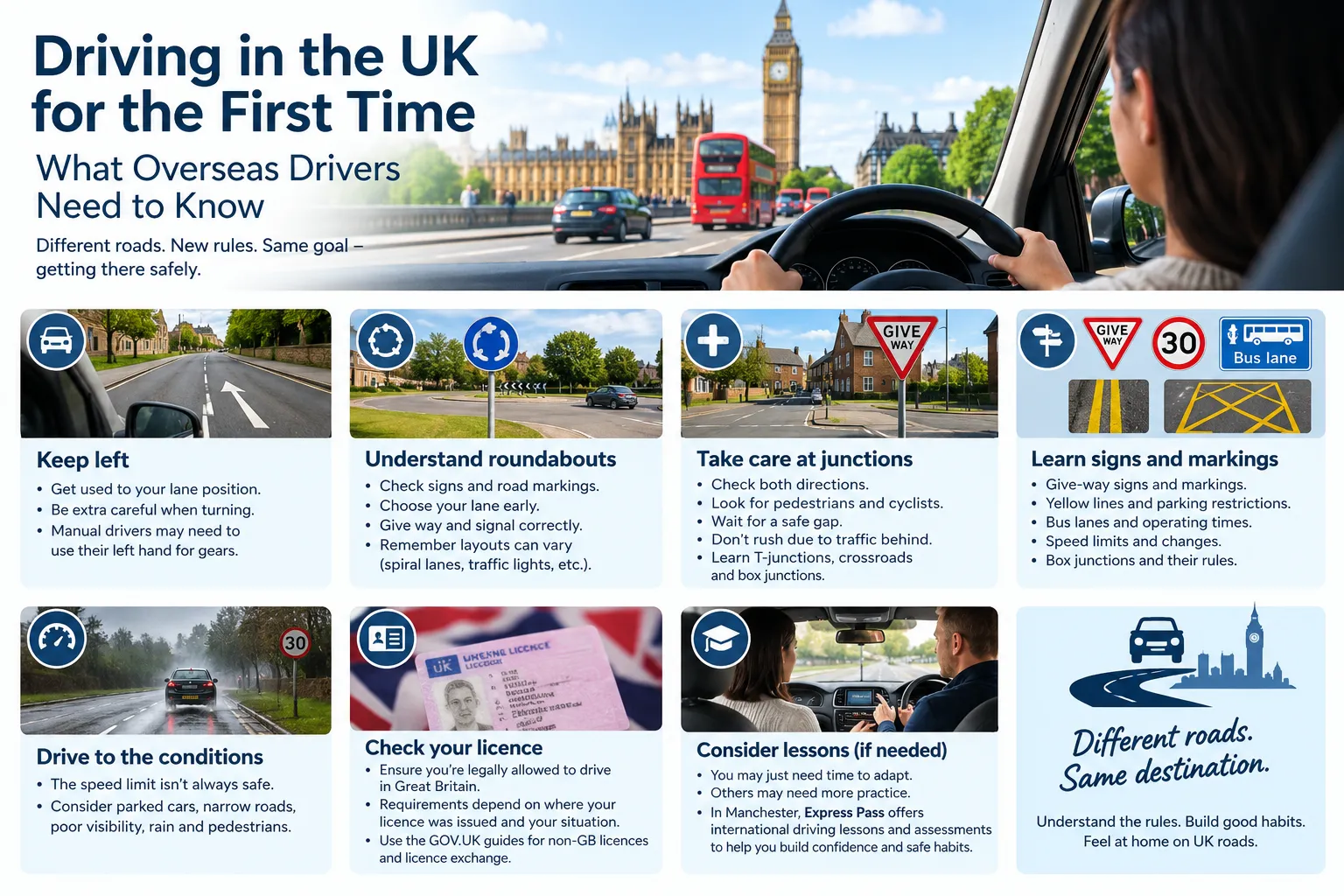
Moving to the UK means getting used to a lot of small differences, from the way people queue to the way roads are laid out. If you have been driving for years in another country, you might expect the roads to be the easy part. In some ways they will be. But driving somewhere unfamiliar takes time, especially when the rules and habits are not quite what you are used to.
The good news is that you do not have to learn everything from the beginning. It helps to know which differences deserve your attention before you get behind the wheel.
Keep left ● Roundabouts ● Junctions ● Road signs ● Speed limits ● Licence rules
Remember to keep left
For drivers used to driving on the right, keeping left can feel strange at first. It is not just a matter of remembering which side of the road to use. You also need to get comfortable with where the car sits in the lane, how you approach junctions and which direction to look when checking for traffic.
Take extra care when turning into a new road. It is easy to concentrate on the turn itself and forget where you should end up afterwards. On quiet roads, give yourself time to settle into the correct position instead of rushing to match the pace of other traffic.
Gear lever tip: If you are driving a manual car, the gear lever will usually be on your left. That can take some getting used to if you have always changed gear with your right hand.
Roundabouts need more than a quick glance
Roundabouts are common in Britain, and they can be confusing when you are unfamiliar with local lane markings and signs.
Before reaching one, look at the direction signs and road markings. Work out which exit you need and choose the appropriate lane in good time. At the entrance, check for traffic approaching from your right and give way as required by the signs, markings and road layout.
Signalling matters, but it needs to reflect what you are actually doing. For example, when taking the first exit to the left, you would normally signal left on approach. For an intermediate exit, the approach signal is not normally needed unless the circumstances indicate otherwise. Always follow the applicable signs and markings.
Watch out: Do not assume every roundabout follows the same layout. Some have spiral lanes, traffic lights or dedicated lanes that change how you should approach and leave. The Highway Code explains the standard procedure in its roundabout guidance.
Get comfortable with UK junctions
At junctions, an examiner or another driver cannot know what you have seen unless your driving shows that you have checked properly. Good observation is not just about moving your head. It is about gathering enough information to make a safe decision.
When emerging from a side road, check the road in both directions, look for pedestrians and cyclists, and judge whether there is a safe gap. Do not let pressure from a queue of cars behind you persuade you to pull out before you are ready.
You will also meet different types of junction, including crossroads, T-junctions and box junctions. Learn what the signs and markings mean before you encounter them in busy traffic.
Understand road signs and markings
Some signs will be familiar, but do not assume that similar-looking signs mean the same thing in different countries. In Britain, pay particular attention to:
- ✓ Give-way signs and road markings
- ✓ Yellow lines and restrictions on stopping or parking
- ✓ Bus lanes and their operating times
- ✓ Speed-limit signs and changes in limits
- ✓ Box junctions and the rules for when you may enter them
The official Highway Code is a good reference when you come across a sign or marking you are unsure about.
Speed limits are not the whole story
Knowing the posted limit is important, but it does not automatically tell you what speed is safe. Narrow streets, parked cars, poor visibility, wet roads and pedestrians can all mean you need to drive below the limit.
You should also understand the national speed limit rules and how they apply to different types of road. Do not rely on assumptions based on how a road looks. Check the signs and the current Highway Code.
Check that you are legally allowed to drive
Before driving on an overseas licence, check whether you are entitled to drive in Great Britain and what restrictions apply. The answer can depend on where your licence was issued and whether you are a resident or a visitor.
Use the official GOV.UK guide to driving in Great Britain on a non-GB licence. If you need to exchange your licence, you can also check the official licence exchange service.
Being legally entitled to drive and feeling confident on British roads are two different things.
Should you take lessons if you have driven for years?
Not everyone who arrives in the UK needs a full course of beginner lessons. Some experienced drivers mainly need time to adapt to local road layouts, roundabouts and the standards expected in the UK practical test. Others may need more extensive practice.
A useful first step is to identify the areas that are unfamiliar, rather than guessing how many lessons you need.
If you are in Manchester, Express Pass offers international driving lessons and an assessment for overseas drivers. The two-hour assessment is designed to review your existing driving ability and help identify what you should work on next.
The aim: It is not to start your driving journey again. It is to help you understand the differences, develop safe habits and feel more at home on UK roads.
Not sure where to start?
Tell us how long you have been driving and where, and we will suggest a sensible starting point.
Message us on WhatsApp
Call 07587 867373
You can also read our guides on how many driving lessons you need and manual vs automatic lessons.