🎉2-hour lessons — manual or automatic — Up to 20% off. Book Now! Book Now
Manchester’s #1 Intensive Driving School
Categories
Driving school in Manchester

Driving School Higher Broughton

Driving School Higher Broughton: Excellence in Driving Education

Driving School Higher Broughton

Choosing a Driving School Higher Broughton is an important decision that will impact your safety for years to come. At Express Pass, we are committed to providing the highest standards of driving education, ensuring that our students in Higher Broughton and beyond not only pass their tests but also become responsible, confident, and safe road users.

Why Express Pass is the Best Choice

As the leading Driving School Higher Broughton, we believe that education should be comprehensive. We go beyond the basics of moving the car. Our instructors teach you how to analyze the road, understand traffic patterns, and make quick, safe decisions. This deep understanding of driving is what separates an average driver from an excellent one.

A Modern, Student-Focused Curriculum

Our Driving School Higher Broughton stays current with all DVSA guidelines and testing standards. We use modern training techniques, including visual aids and progress reports, to help you track your development. Whether you need help with hazard perception, theory test prep, or perfecting your maneuvers, we have the resources to guide you through every stage of the process.

Patient and Dedicated Instructors

We know that learning to drive involves a range of emotions. Our instructors in Higher Broughton are highly trained to remain patient and calm, ensuring that you always feel safe and encouraged during your lessons. We focus on your individual goals, helping you overcome your specific challenges in an environment where you are free to learn without pressure.

Your Path to a Full License Starts Here

We have helped hundreds of students in Higher Broughton pass their tests on the first attempt. Our reputation for excellence is built on our transparency, our professionalism, and our unwavering commitment to our students’ success. When you enroll with Express Pass, you are investing in a future of safe driving.

Don’t wait for your driving goals to become a reality—take action today.

Categories
Driving school in Manchester

Female Driving Instructor Lower Broughton

Female Driving Instructor Lower Broughton: Safe, Supportive, and Professional

Female Driving Instructor Lower Broughton

Learning to drive is a significant step that can sometimes feel nerve-wracking. We understand that for many learners, having the right instructor is the difference between a stressful experience and a rewarding one. That is why Express Pass is pleased to offer the services of a professional Female Driving Instructor Lower Broughton, creating a learning environment that is comfortable, inclusive, and tailored to your needs.

Why Choose a Female Instructor?

Many students feel more at ease, focused, and empowered when learning with a Female Driving Instructor Lower Broughton. Our instructors are known for their empathetic approach, patience, and ability to communicate complex driving concepts in a clear, supportive way. They create an atmosphere where you can ask questions without feeling rushed or judged, which is essential for building your self-belief behind the wheel.

Professional Training Standards

Our female instructors are just as skilled and experienced as the rest of our DVSA-approved team. They hold all the necessary certifications and follow the same rigorous Express Pass training standards. Whether you are learning to handle heavy city traffic, mastering roundabouts, or practicing your emergency stop, you will receive top-tier technical training that is designed to help you pass your test and keep you safe on the roads of Lower Broughton.

A Personalized Learning Path

Your Female Driving Instructor Lower Broughton will work with you to understand your specific anxieties and goals. She will tailor each lesson to ensure that you are making consistent progress. If you find certain maneuvers difficult, she will provide the support needed to help you overcome them at your own pace. This student-first approach is what sets us apart as a leading driving school in the area.

Start Your Journey Today

We invite you to reach out and schedule your first lesson with our professional team. If you prefer a supportive and professional learning environment, book your Female Driving Instructor Lower Broughton by visiting https://expresspass.co.uk/. We are here to support you every mile of the way as you work toward your goal of passing your driving test and gaining your independence.

Categories
Driving school in Manchester

 Intensive Driving Course Miles Platting

Intensive Driving Course Miles Platting: Fast-Track to Driving Success

Intensive Driving Course Miles Platting

Sometimes, learning to drive over several months is not an option. Whether you need a license for your career or a personal commitment, our Intensive Driving Course Miles Platting at Express Pass offers the most efficient way to get on the road. By concentrating your training into a shorter period, you can build muscle memory and confidence much faster, helping you reach test standard in record time.

Why Choose an Intensive Course?

The main advantage of an Intensive Driving Course Miles Platting is consistency. When you take lessons once a week, you often spend part of the next lesson reviewing what you forgot. With an intensive format, you are constantly engaged in driving. This keeps your skills sharp and helps you integrate the rules of the road and technical maneuvers into your subconscious, making you a much more capable driver in a short span of time.

Structured and Comprehensive Training

Our Intensive Driving Course Miles Platting is not just a “crash course.” It is a highly structured, comprehensive curriculum that covers every aspect of the DVSA syllabus. From basic car control to advanced hazard perception and full mock tests, we ensure you are fully prepared for the challenges of the practical exam. Our instructors in Miles Platting are seasoned professionals who know exactly how to guide you through this accelerated pace.

Personalized for You

Before you start your intensive course, we assess your experience level. Whether you are a total beginner who needs a comprehensive 30-hour course or a learner who just needs a 10-hour intensive refresher to prepare for a test, we have an option for you. We tailor the training to focus specifically on your weak points, ensuring that every hour of your Intensive Driving Course Miles Platting is utilized for maximum benefit.

Join Express Pass Today

We are committed to helping our students achieve their goals as quickly as possible without sacrificing quality.Choose the most reliable Intensive Driving Course Miles Platting and get on the road to success with Express Pass.

Categories
Driving school in Manchester

Manual Driving Lessons Strangeways

Manual Driving Lessons Strangeways: Complete Control and Skill

Manual Driving Lessons Strangeways

Manual transmission is a foundational skill that gives you total control over your car. Our Manual Driving Lessons Strangeways are designed to help you become a master of the clutch, gear shifting, and vehicle dynamics. At Express Pass, we believe that learning to drive a manual car provides you with the versatility to drive any vehicle, giving you the ultimate freedom on the road.

The Fundamentals of Manual Driving

The core of our Manual Driving Lessons Strangeways is mastering the interaction between the throttle, clutch, and gearbox. Our instructors are experts at teaching the “bite point,” which is often the biggest hurdle for new learners. By breaking this down into clear, repeatable steps, we ensure that you can pull away smoothly, perform clean gear changes, and maintain engine efficiency under various conditions in Strangeways.

Mastering Challenging Environments

The diverse roads of Strangeways provide the perfect training ground for manual drivers. You will learn how to handle hilly terrain, busy urban traffic, and complex maneuvers all while managing your gears. We focus on teaching you how to “read” the road so that you know which gear to be in before you need to change, which is a key skill assessed during your driving test.

Building Proactive Driving Habits

Beyond the technical skills, our Manual Driving Lessons Strangeways emphasize hazard perception. We want you to be able to scan the road, identify potential dangers, and react calmly. Whether it is responding to sudden braking from the car ahead or navigating around parked vehicles, our instructors will guide you through how to remain in control of your car in every scenario.

Your Path to a License

By choosing Express Pass, you are joining a school that values safety and excellence. We ensure that every lesson is productive, with clear goals set for every session. Visit https://expresspass.co.uk/ to book your Manual Driving Lessons Strangeways. We are committed to helping you gain the confidence and skill needed to pass your test the first time. Experience the difference that expert, professional instruction can make.

Categories
Driving school in Manchester

Driving Instructor Collyhurst

Driving Instructor Collyhurst: Your Expert Guide to Road Safety

Driving Instructor Collyhurst

Finding the right Driving Instructor Collyhurst is the most critical factor in your path to a full license. At Express Pass, we pride ourselves on having a team of instructors who are not just teachers, but mentors dedicated to your success. Our instructors bring years of experience to Collyhurst, helping students turn their nerves into skill and confidence.

What Makes an Expert Instructor?

A professional Driving Instructor, Collyhurst knows that driving is about more than just moving a vehicle; it is about safety, anticipation, and respect for other road users. Our instructors are fully DVSA-approved and undergo continuous training to stay updated with the latest road laws and teaching methods. They are known for their extreme patience, ensuring that even the most anxious learners feel comfortable and supported during every single lesson.

Local Knowledge of Collyhurst

The roads in Collyhurst can be tricky, with various traffic calming measures and specific junctions that examiners love to include in tests. Because our team knows these roads intimately, they can prepare you for exactly what you will face. They will take you through common test routes, explaining how to handle specific roundabouts, how to manage speed limits, and how to safely navigate pedestrian crossings.

A Focus on Your Development

We understand that everyone progresses at a different speed. Your Driving Instructor Collyhurst will work with you to create a personalized lesson plan. If you are struggling with a specific maneuver, such as parallel parking or reverse bay parking, we will dedicate the necessary time to ensure you master it. We provide constructive, real-time feedback that helps you correct mistakes immediately, preventing bad habits from forming.

Start Your Driving Success Story

Don’t settle for anything less than excellence. When you choose an instructor from Express Pass, you are choosing professionalism, safety, and a commitment to your long-term success. Visit https://expresspass.co.uk/ to find your Driving Instructor Collyhurst today. With our help, you will not only pass your driving test but also become a safe and responsible driver for life.

Categories
Driving school in Manchester

Automatic Driving Lessons Harpurhey

Automatic Driving Lessons Harpurhey: A Faster Route to Your License

Automatic Driving Lessons Harpurhey

For many learners in Harpurhey, the prospect of mastering a manual gearstick and clutch control can be a significant source of stress. At Express Pass, we offer a modern solution: Automatic Driving Lessons Harpurhey. By learning in an automatic vehicle, you can remove the complexity of gear changes, allowing you to focus entirely on the road, traffic signals, and your surroundings.

Why Choose Automatic Lessons?

The primary benefit of Automatic Driving Lessons Harpurhey is the simplicity it offers. In an automatic car, there is no clutch pedal and no manual gear lever. This means you do not have to worry about stalling the engine at a busy junction or rolling back on a hill. For many students, this creates a much more relaxed learning environment, which often results in faster progress and reaching test standard in fewer hours.

Mastering Urban Traffic in Harpurhey

Harpurhey can have busy traffic, especially during peak hours. Maneuvering through this environment requires high levels of concentration. With automatic transmission, you have one less task to perform, which allows you to become much more observant of other road users. Our instructors are experts at teaching lane discipline and defensive driving in automatic cars, ensuring that you develop superior spatial awareness.

Modern Fleet and Expert Guidance

We take pride in our modern, well-maintained automatic vehicles. During your Automatic Driving Lessons Harpurhey, you will learn to utilize the vehicle’s features to maximize safety and efficiency. Our instructors are specially trained to teach automatic driving, offering specific advice on how to handle the car’s power delivery and braking system. You will receive the same rigorous training as our manual students, covering all DVSA requirements, including maneuver practice and hazard perception.

Join Express Pass for a Smoother Journey

Choosing Automatic Driving Lessons Harpurhey doesn’t mean you are missing out on skills; it simply means you are choosing a method that fits your personality and learning style. Many of our students who initially struggled with manual gears found their confidence skyrocketing once they switched to automatic.. We are here to help you gain your freedom on the road with the most professional training in the area.

Categories
Driving school in Manchester

Driving Lessons Crumpsall

Driving Lessons Crumpsall: Expert Training for Confident Drivers

Driving Lessons Crumpsall

Crumpsall is a vibrant community with a variety of road types that make it an excellent training ground for new drivers. At Express Pass, our Driving Lessons Crumpsall are specifically designed to help local learners master the unique challenges of the area while preparing for the practical driving test. Whether you are navigating the quieter residential streets or heading toward the busier junctions of North Manchester, our program ensures you have the skills to drive safely for a lifetime.

The Importance of Localized Training

Learning to drive is not just about memorizing traffic rules; it is about developing “road sense”—the ability to anticipate what will happen next. Our Driving Lessons Crumpsall place a heavy emphasis on local road knowledge. By practicing in Crumpsall, you become familiar with the specific speed limits, pedestrian crossings, and road layouts that you will face during your test.

Building Your Foundation

For many, the first few lessons are the most daunting. Our instructors are famous for their patience and calm demeanor. We start your Driving Lessons Crumpsall with the basics: the cockpit drill, understanding your controls, and mastering the clutch. By creating a relaxed environment, we ensure that you don’t feel overwhelmed, which allows you to grasp the fundamental concepts of driving faster and more effectively.

Developing Defensive Driving Skills

We believe that a great driver is a defensive driver. Throughout your training in Crumpsall, we focus on how to observe your surroundings effectively. We teach you how to check your mirrors correctly, how to maintain a safe distance from other vehicles, and how to spot potential hazards, such as parked cars, cyclists, or children playing near the road. These habits are crucial for passing your test and, more importantly, for keeping you safe once you have your license.

Tailored Curriculum for Your Success

At Express Pass, we do not believe in a “one-size-fits-all” curriculum. Every learner has different strengths and areas where they might need more practice.

Handling Complex Maneuvers

Whether it is reverse parking, emergency stops, or three-point turns, our instructors break these maneuvers down into simple, logical steps. During your Driving Lessons Crumpsall, we practice these on quiet roads until you feel completely confident, then gradually move to busier streets to test your skills in real-world scenarios.

Preparing for the Practical Test

Our goal is to get you to “test standard” as efficiently as possible. We use mock tests to simulate the pressure of the real exam. This practice helps you stay calm under the gaze of an examiner. By the time your actual test arrives, you will have navigated the local routes so many times that the experience will feel like second nature.

Why Express Pass is the Best Choice in Crumpsall

We are proud to serve the community of Crumpsall with professional, high-quality instruction. We are not just another school; we are a partner in your success.

  • Experienced Instructors: Our team consists of fully qualified, DVSA-approved professionals.
  • Student-Centric Approach: We focus on your specific needs and learning pace.
  • Affordable Quality: We believe that expert training should be available at a fair price.

Start your journey to independence with the best Driving Lessons Crumpsall has to offer.

Categories
Driving school in Manchester

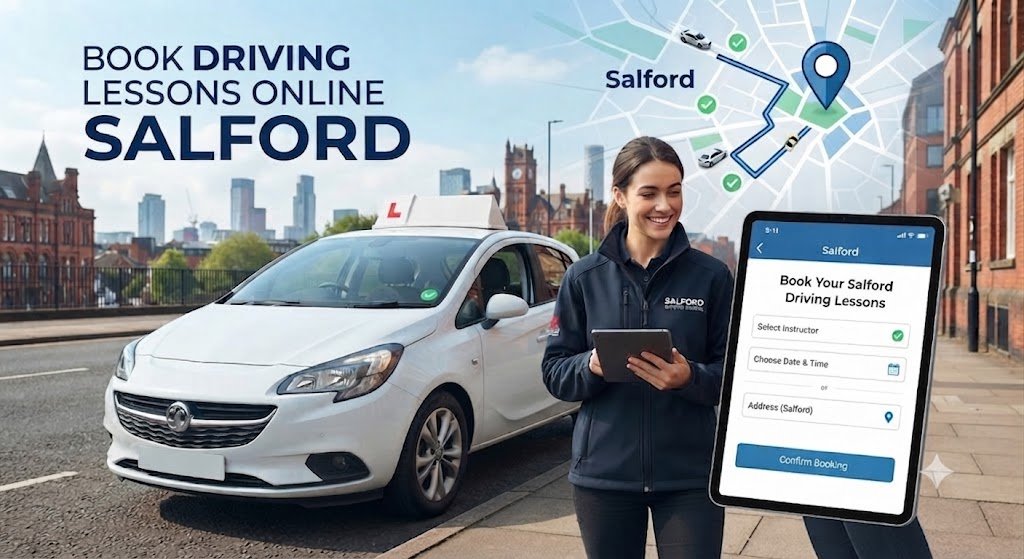
Book Driving Lessons Online Salford

Book Driving Lessons Online Salford: Simplifying Your Path to Independence

Book Driving Lessons Online Salford

In the modern age, efficiency is everything. When you decide to start your driving journey, the last thing you want is the hassle of endless phone calls, navigating office hours, or waiting for callbacks. At Express Pass, we have revolutionized the learning experience by allowing you to Book Driving Lessons Online Salford. Our digital platform is designed to put you in the driver’s seat of your own scheduling, ensuring that your path to obtaining a full driving license is as smooth and professional as possible.

Why Online Booking is the Future of Learning

The traditional method of booking driving lessons—calling multiple schools, checking availability over the phone, and trying to align schedules—can be incredibly frustrating. When you choose to Book Driving Lessons Online Salford via our website, you eliminate all that stress.

24/7 Availability at Your Fingertips

Our online booking portal is live and accessible 24 hours a day, 7 days a week. Whether you are a student busy with classes, a working professional, or simply someone with a tight schedule, you can log in at any time that suits you. You can see the real-time availability of our DVSA-approved instructors in the Salford area, select the time slot that fits your day, and confirm your booking instantly. This autonomy ensures that you never miss an opportunity to practice, keeping your progress steady and your momentum high.

Transparency and Security

When you Book Driving Lessons Online Salford through Express Pass, you are guaranteed complete transparency. You will see the pricing structures clearly, with no hidden fees or surprise costs. Furthermore, our secure payment gateway ensures that your financial information is protected. Once your payment is processed, you receive immediate confirmation via email, giving you peace of mind that your lesson is locked in.

How Our Online System Enhances Your Progress

Beyond just booking, our system acts as a hub for your training. By choosing to Book Driving Lessons Online Salford with us, you are joining a school that prioritizes your organizational needs as much as your driving skills.

Personalized Instructor Matching

Not every student learns the same way. Our booking platform allows you to choose an instructor who best matches your personality and learning style. If you prefer a more patient, calm approach or someone who specializes in intensive training, you can browse through profiles and select the right fit. This personal touch ensures that your lessons are always productive, making the process of becoming a confident driver much faster.

Managing Your Training Schedule

Life is unpredictable. We understand that meetings run late or study sessions take longer than expected. Our portal allows you to manage your schedule easily. If you need to reschedule a lesson, you can do so through our online interface, ensuring that you never lose your progress. This level of flexibility is part of our commitment to making Express Pass the best driving school in Salford.

Stay Organized and Focused

When you Book Driving Lessons Online Salford, you are taking the first step toward a well-organized training program. Being able to see your upcoming lessons in one place helps you stay focused on your goals. It helps you prepare mentally for each session, whether it’s a focus on roundabout navigation, parallel parking, or hazard perception. Start your journey the right way—efficiently and professionally. 

Categories
Driving school in Manchester

Driving Lessons Cheetham Hill

Driving Lessons Cheetham Hill: Master the Roads with Express Pass

Driving Lessons Cheetham Hill

Learning to drive in a bustling area like Cheetham Hill requires more than just knowing how to operate a vehicle; it requires sharp observation and the ability to handle diverse traffic situations. At Express Pass, we provide tailored Driving Lessons Cheetham Hill that are designed to build your confidence and ensure you are fully prepared for your practical driving test.

Why Choose Express Pass in Cheetham Hill?

When you start looking for Driving Lessons Cheetham Hill, you need a school that understands the local road network. Our instructors are highly experienced in navigating the unique challenges of this part of North Manchester.

Expert DVSA-Approved Instructors

All our instructors are DVSA-approved, ensuring that you receive professional training that meets national safety standards. We focus on teaching you the correct habits from day one, which is essential for passing your test and staying safe long after you get your license.

Tailored Learning for Every Student

We know that every student is different. Whether you are a nervous beginner or someone who has driven before and needs a refresher, our Driving Lessons Cheetham Hill are customized to fit your pace. We break down complex maneuvers into simple, manageable steps to ensure you feel secure behind the wheel.

Mastering Complex Traffic Environments

Cheetham Hill is known for its busy commercial routes and pedestrian activity. Our training goes beyond the basics to help you handle these specific urban challenges.

Defensive Driving Techniques

One of the core components of our Driving Lessons Cheetham Hill is defensive driving. We teach you how to anticipate the actions of other drivers, handle heavy traffic, and remain calm in high-pressure situations. This proactive approach is the hallmark of a skilled and safe driver.

Navigating Local Test Routes

Our instructors have extensive knowledge of the common routes used during driving tests in the area. By practicing on these specific roads, you will become familiar with challenging roundabouts, speed limit changes, and pedestrian crossings, significantly reducing your test-day anxiety.

Ready to Start Your Driving Journey?

We make it easy for you to begin. With flexible scheduling and a commitment to excellence, Express Pass is the premier choice for anyone seeking quality Driving Lessons Cheetham Hill.

  • Convenient Booking: Visit https://expresspass.co.uk/ to secure your spot.
  • Professional Support: Our team is here to answer any questions you have about your training.
  • Proven Results: Join the hundreds of students who have trusted us to help them achieve their driving goals.

Don’t wait any longer to gain your independence. Contact us today and let our expert instructors guide you toward passing your test!

Categories
Driving school in Manchester

Affordable Driving Lessons Salford

Affordable Driving Lessons Salford

Affordable Driving Lessons Salford

Learning to drive is a significant milestone that brings newfound independence. However, the cost of high-quality instruction can often feel like a hurdle. At Express Pass, we believe that everyone deserves top-tier training, which is why we specialize in providing Affordable Driving Lessons Salford. We have designed our courses to be cost-effective without compromising on the high standards required to make you a safe and confident driver on the roads of Greater Manchester.

Why Quality Training is Essential in Salford

Many learners search for the lowest price, only to end up with instructors who lack the necessary experience. When you choose Affordable Driving Lessons Salford with Express Pass, you are choosing DVSA-approved instructors who understand the unique challenges of driving in this region. Whether you are navigating the busy intersections of Salford Quays or learning the fundamentals in the quieter residential zones of Pendleton, our instructors provide a structured environment that prioritizes your success.

We focus on “smart learning.” Rather than dragging out the training process, we assess your skills immediately and focus on areas that require the most improvement. This approach not only makes our training more efficient but also ensures that you spend less money in the long run by reaching test-readiness faster.

Mastering the Local Routes

One of the biggest advantages of choosing a local school is our deep familiarity with the area. Our instructors will guide you through the specific roads you are likely to encounter during your practical test. From handling complex roundabouts near MediaCityUK to maneuvering through the tight streets of Claremont, we ensure you are prepared for every scenario.

During your Affordable Driving Lessons Salford, we cover:

  • Defensive driving techniques suited for heavy traffic.
  • Mastery of major junctions and Salford’s high-traffic zones.
  • Parking maneuvers that are common in urban areas.
  • Hazard perception training tailored to the local road network.

A Learning Experience Designed for You

We understand that every learner is different. Some may feel nervous in heavy traffic, while others might struggle with manual gear control. Our instructors are trained to be incredibly patient and supportive, fostering a stress-free atmosphere that allows you to focus on developing your skills. By keeping the environment calm and professional, we help you overcome any driving anxiety, ensuring you feel 100% ready when the day of your test arrives.

Convenience at Your Fingertips

At Express Pass, we have simplified the entire process. You don’t need to spend hours on the phone. Whether you are looking to book your first session or manage a series of Affordable Driving Lessons Salford, our platform is open 24/7. We offer flexible scheduling, including evenings and weekends, to fit around your work or study commitments in Salford.

Join the Express Pass Family Today

Passing your driving test is more than just getting a license; it is about gaining a life-long skill that keeps you and your passengers safe. By choosing Express Pass, you are opting for a school that values transparency, quality, and your long-term success. We don’t have hidden fees, and we are dedicated to helping you achieve your goal on the first attempt.

If you are ready to start your journey, don’t wait any longer. Take advantage of our Affordable Driving Lessons Salford and experience the difference that professional, expert guidance can make. Visit our website at Express Pass to secure your spot today and start driving with confidence across Salford and beyond!

Categories
Driving school in Manchester

How to Book Driving Test Early and Find Slots Fast

A practical test date can feel like the last thing standing between you and more freedom, a new job or getting to university without relying on lifts. If you are wondering how to book driving test early, the key is not simply refreshing a page and hoping for luck. You need a clear search strategy, the right details ready and enough driving practice to make an earlier appointment work in your favour.

An early test is only a win if you arrive ready to pass. The fastest route is to combine a realistic target date with structured lessons, mock-test practice and regular checks for newly available appointments.

Start with the official DVSA booking service

Book and manage your practical driving test through the official DVSA service. You will need your provisional driving licence number, your theory test pass certificate number and a valid payment method. Without a passed theory test, you cannot book the practical test, so this is the first milestone to clear.

When choosing a test centre, think beyond the first date you see. Select the centre where you are learning if possible, because familiarity with local road layouts, junctions and traffic conditions can help you feel calmer on the day. In Manchester and the surrounding areas, availability can vary significantly between nearby test centres, so checking a sensible number of local options may give you more choice.

The system usually shows appointments several months ahead. If the dates are later than you hoped, book the most suitable available slot first. This gives you a confirmed appointment to work towards while leaving you free to look for an earlier date through the official change-booking process.

How to book driving test early through cancellations

Most earlier appointments appear when another learner changes or cancels their test. These slots can go quickly, especially for popular Manchester test centres, but they do appear throughout the week.

Log in to your existing booking and use the option to change the test date or test centre. Check at different times rather than only once per day. Cancellations can be released at any point, often when a learner’s plans change, their instructor advises more preparation or they find a more convenient appointment elsewhere.

Be flexible where it makes sense. An earlier weekday test, a different time of day or a nearby test centre may be easier to find than a specific Saturday morning appointment. That said, do not choose a centre so far away that you cannot practise there or arrange a suitable car for the test. Saving a few weeks is not worth arriving on unfamiliar roads feeling underprepared.

You should also keep your diary clear enough to take a short-notice slot. Before changing your test, check that your instructor is available, that you can use a suitable insured car and that you can arrange time away from work, college or other commitments.

Be ready before you chase a sooner date

An earlier test date creates pressure if your driving is still inconsistent. Before you move a booking forward, ask whether you can drive independently for most of a lesson, not just when your instructor is giving frequent prompts.

You should be comfortable with manoeuvres, meeting traffic, roundabouts, dual carriageways where appropriate, following sat-nav directions and dealing with busy conditions safely. You also need to show good judgement: checking mirrors before changing speed or direction, choosing the correct lane early and making progress without rushing.

A mock test is one of the best ways to find out whether you are genuinely close. It highlights the habits that can cost you on the day, such as hesitation at junctions, missed mirror checks or losing concentration after a small mistake. One imperfect drive does not mean you are not ready. What matters is whether the same faults keep returning and whether you can correct them without being reminded.

For learners who need a focused push, intensive lessons can make a real difference. Several hours of structured practice across a short period gives you time to build consistency rather than restarting each week. Express Pass can help learners match their current experience and target date to a course plan that leaves time for proper test preparation.

Choose the date that gives you the best chance

The earliest date is not always the best date. If you have only driven in quiet conditions, a test next week may be a poor trade-off. Equally, if you have already had plenty of lessons, passed mock tests and recently failed because of one correctable error, waiting months for another appointment may not be necessary.

Consider your recent driving rather than the total number of lessons you have taken. A learner returning after a long break may need time to rebuild confidence. A person who drives well but needs to sharpen parking or independent driving may be ready much sooner. Automatic and manual learners should make sure their booking matches the type of car they plan to use, as the licence entitlement is different.

Test timing matters too, although there is no guaranteed easy time of day. A morning appointment may involve school-run traffic. Midday can bring different road conditions, while later tests may be affected by rush hour. The best choice is usually a time when you are alert, your instructor can provide a final warm-up lesson and you have practised in similar conditions.

Avoid costly shortcuts and unrealistic promises

Demand for tests has created a market for third-party cancellation services and people claiming they can guarantee a fast test. Treat these promises carefully. Only the DVSA controls practical test appointments, and no service can guarantee that a cancellation will appear at your chosen centre on your ideal date.

Never share your driving licence details, theory certificate information or payment details with someone you do not trust. Be cautious of large upfront fees, vague terms and claims that sound too good to be true. A cancellation finder may alert you to availability, but you still need to make the decision based on your readiness and the practical details around the date.

Also remember the rules around changing or cancelling. Check the conditions for your appointment before moving it, particularly if the new date is close. Leaving changes too late can mean losing the test fee. Keep confirmation emails and make a note of every test date you accept.

Build a simple early-test plan

A strong plan keeps the search from becoming stressful. First, pass your theory test and book the best available practical date. Next, agree with your instructor what standard you need to reach before accepting a cancellation. Then check for earlier appointments regularly while continuing lessons as if your current test date is fixed.

Use each lesson to target the areas most likely to affect your result. If roundabouts are a weak point, practise different types rather than repeating the same familiar route. If nerves affect your judgement, build in mock-test conditions and independent driving. If you are retaking after a fail, focus on the actual reason for the result instead of trying to change everything at once.

Keep your documents and plans organised. Your provisional licence must be valid, your car must meet test requirements and be insured for the test, and you need to be able to read a number plate from the required distance. These basics are easy to overlook when your attention is fixed on finding a sooner appointment.

Make the earlier date count

Finding an earlier slot is satisfying, but it should be the start of a focused final phase, not a reason to panic. Use the days before the test to practise the routes and skills that challenge you, sleep properly and keep your normal routine as much as possible.

The goal is not just to get a test date quickly. It is to turn that date into a pass that gives you real independence. Stay flexible, keep practising with purpose and take the earlier appointment when your driving shows you are ready for it.

Categories
Driving school in Manchester

Driving Test Route Practice That Pays Off

Most learners do not fail because they cannot drive. They fail because the test feels unfamiliar, the pressure rises, and simple decisions suddenly get messy. That is why driving test route practice matters. It turns unknown roads, awkward junctions and busy roundabouts into something you have already seen, already handled and already worked through with a plan.

If you need to pass quickly, practising likely test areas is not a bonus. It is one of the fastest ways to build real confidence. You are not trying to memorise a script. You are training your eyes, your timing and your judgement so you can deal with whatever the examiner puts in front of you.

What driving test route practice actually does

A good test route session is not about chasing rumours of a secret examiner route. Test routes can change, and relying on memory alone is a weak strategy. What helps is learning the patterns of the local area.

Every test centre tends to have its own pressure points. It might be a spiral roundabout, a steep hill, a narrow residential road with parked cars, or a dual carriageway merge that catches people out when nerves kick in. Practising those types of roads in the area where you are likely to take your test makes your driving calmer and more consistent.

This matters even more if you are on a deadline. If you are balancing work, uni, family or a retest after a recent fail, you do not want to spend lesson time drifting around at random. You want your practice to target the roads and situations most likely to expose hesitation, poor positioning or missed observations.

Driving test route practice vs general lessons

General driving lessons build your core skills. You need them. But once you can move off safely, manage gears or control an automatic smoothly, deal with roundabouts and drive independently, the focus should tighten.

Driving test route practice is where those core skills get pressure-tested. Can you keep good lane discipline when signs come at you quickly? Can you stay composed when a sat nav direction lands just before a busy junction? Can you read a complicated road layout without rushing? That is where passes and fails are often decided.

There is a trade-off here. If you are still very early in learning, too much route-based practice can be wasted because you are not yet ready to deal with complex traffic consistently. But if you are near test standard, route practice becomes one of the smartest uses of your time.

Why local knowledge gives you an edge

Local practice helps because real roads have personalities. Some junctions look simple until traffic builds. Some mini-roundabouts tempt learners to cut across. Some town centre roads demand quick mirror checks, sharp hazard awareness and precise speed control all at once.

When you know the area, your brain has more space for better decisions. You are not burning mental energy trying to work out whether the left lane disappears, whether the road bends sharply after the lights, or whether parked cars usually force a give-way point ahead. You have seen the setup before, so you can focus on driving well.

That does not mean familiarity guarantees a pass. Overconfidence can be just as risky as nerves. Some learners relax too much on roads they know and stop checking mirrors properly or drift on positioning. The goal is not casual driving. It is controlled, test-ready driving.

How to make driving test route practice effective

The best route practice has a purpose. Driving the same circuit again and again with no feedback will only get you so far. What works is targeted repetition.

Start by identifying where mistakes happen. If you struggle at roundabouts, spend time on different types – mini, multi-lane and larger spiral layouts. If meeting traffic on narrow roads causes hesitation, work specifically on planning, patience and road position. If independent driving throws you off, practise following signs and sat nav instructions while keeping your observations sharp.

Then repeat those areas until your reactions settle down. Not perfect every time, but stable. You should feel yourself making earlier decisions, checking mirrors without being prompted and choosing the right speed with less effort.

It also helps to vary the time of day. A quiet mid-morning road can feel completely different at school run time or during after-work traffic. If your test could happen in busier conditions, some of your practice should reflect that. There is no point feeling brilliant on empty roads and then getting rattled by queues, cyclists and pedestrians when it counts.

What to look for on likely test roads

During practice, pay attention to the details that often lead to faults. Lane choice is a big one, especially where road markings appear late or signs are easy to miss. Speed control matters too, not just sticking to the limit but choosing a safe speed for parked cars, bends and changing traffic conditions.

Watch for pedestrian crossings near junctions, bus lanes, filter lights, faded markings and roads where priorities become unclear. Many test faults come from moments where the learner was not reckless, just slightly late spotting what was developing.

You should also practise recovering calmly from small mistakes. If you take the wrong turn but do it safely, that is usually not a problem. Panic is the problem. Good route practice teaches you to stay composed, keep driving and wait for the next instruction.
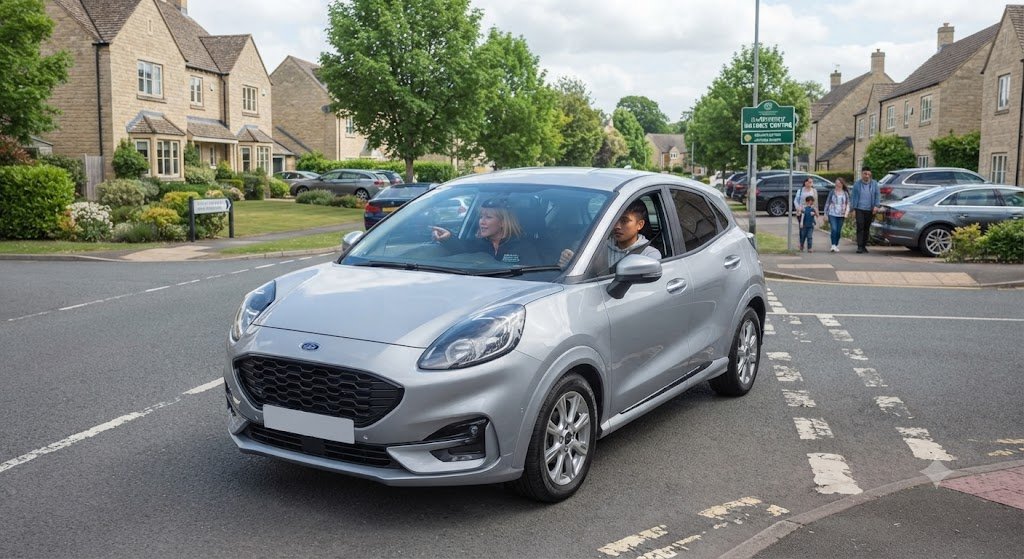
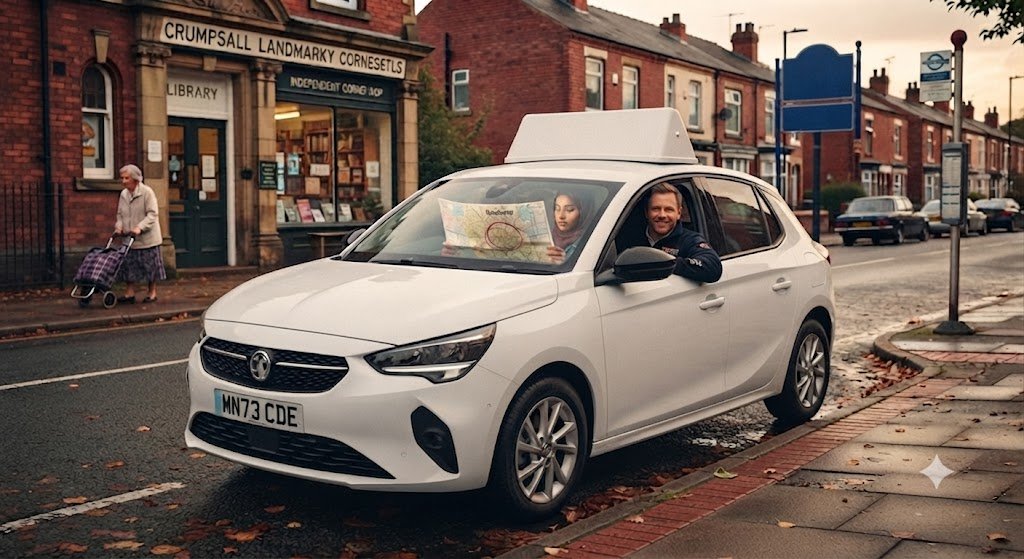
Mock tests make route practice stronger

One of the quickest ways to sharpen route work is to include mock tests. They expose the difference between being able to drive and being able to perform under test conditions. A learner who seems comfortable in normal lessons can suddenly rack up faults once they know they are being assessed.

That pressure is useful when it is managed properly. You find out where nerves affect you. Maybe your mirror routine slips. Maybe your clutch control gets jerky. Maybe your decisions become too hesitant. Once you know that, your route practice becomes more focused.

For retest candidates, this is especially valuable. If you recently failed, there is a strong chance the issue was not overall ability but a handful of moments under pressure. Mock tests on local roads help you fix the pattern rather than just hope for a better day next time.

Intensive learners need route practice even more

If you are learning on an intensive course, every hour needs to count. That is where route-based preparation can really pay off. You are compressing learning into a shorter time frame, so structured repetition matters more.

Instead of spreading confidence across months, you are building momentum quickly. The upside is fast progress. The downside is that weak spots can hide until late unless your lessons are organised well. Focused route practice brings those weak spots to the surface early enough to fix them.

For learners in Manchester, where traffic conditions can change fast between quieter residential roads and busier urban routes, local familiarity can make a real difference. A focused instructor will not just tell you to keep going. They will show you why a junction catches people out and what a stronger approach looks like next time.

Common mistakes during driving test route practice

The biggest mistake is trying to memorise turns instead of improving judgement. If the route changes, that approach falls apart. Learn the road types, the local hazards and the decisions that matter.

Another mistake is only practising your favourite roads. Learners naturally drift towards places where they feel comfortable, but your progress usually sits on the roads you avoid. If right turns at busy junctions make you tense, that is exactly where some of your best work needs to happen.

It is also easy to overdo it. Too many route sessions without proper feedback can make practice stale. If your driving is plateauing, change the focus. Work on commentary driving, independent driving, manoeuvres, or one specific fault pattern rather than just circling the same area.

When are you getting enough practice?

There is no magic number of route sessions that guarantees a pass. Some learners need a few focused runs near test standard. Others need more time because their nerves, decision-making or observations still wobble in busy situations.

A better question is this: are your drives becoming predictable in a good way? Fewer repeated faults, calmer decisions, better anticipation and less instructor input usually mean your practice is working. If every session still produces the same mistakes in the same places, more hours alone will not solve it. The quality of the coaching matters.

Strong preparation is not about chasing luck on test day. It is about making the roads feel familiar enough that you can drive with confidence, even when the pressure shows up. Keep your route practice focused, honest and consistent, and passing starts to look less like hope and more like a plan.

Categories
Driving school in Manchester

Crash Driving Course Manchester: Is It Worth It?

You do not look for a crash driving course Manchester learners rate highly unless time matters. Maybe you have a job lined up, university starting soon, a retest hanging over you, or you are simply tired of dragging lessons out for months. When passing quickly matters, the right intensive course can move you from stalled plans to test-ready with far less wasted time.

That said, fast does not mean rushed. A good intensive course is built around structure, not pressure. The goal is simple – give you enough focused tuition, on the right schedule, with the right instructor, so you build skill quickly and walk into your test feeling prepared rather than overwhelmed.

What a crash driving course in Manchester actually means

A crash course is simply an intensive way to learn. Instead of one lesson a week over several months, you condense your training into a much shorter window. That might mean a few hours a day across one or two weeks, or a slightly longer schedule if you need more time around work, college, or family commitments.

In Manchester, that approach appeals to learners who want momentum. It is easier to retain what you practised yesterday when you are back behind the wheel again tomorrow. Roundabouts, junctions, manoeuvres and dual carriageways start to feel familiar faster because you are repeating them consistently, not trying to remember what happened in a lesson ten days ago.

The best courses are not one-size-fits-all. A complete beginner needs a different plan from someone who can already handle traffic but keeps slipping up on mirrors, positioning, or nerves in the test area. That is why course matching matters. Too few hours and you feel exposed. Too many and you pay for time you may not need.

Who should book a crash driving course Manchester learners trust?

If your priority is speed with structure, an intensive course makes sense. It suits learners who are motivated, available for regular lessons, and ready to treat driving like a short, focused project rather than a long-term hobby.

It works especially well for people with a deadline. Students heading to university, professionals needing a licence for work, and learners who have already had lessons in the past often get strong value from concentrated training. Retest candidates can also benefit because the gap between fixing mistakes and sitting the next test stays short, which helps confidence.

But it is not perfect for everyone. If you struggle badly with anxiety, have very limited availability, or find long sessions mentally draining, a slower pace may work better. Fast progress is only useful if you can absorb it. A serious driving school should say that plainly, not push every learner into the biggest package.

Why intensive courses can work better than weekly lessons

The biggest advantage is continuity. Weekly lessons can be effective, but they often include time spent recapping old ground. With a crash course, your learning stays live. You make a mistake, correct it, and revisit the same skill before it fades.

There is also a practical benefit. Spreading lessons over months can mean dealing with instructor availability, life interruptions, and rising costs. Intensive training gives you a clearer runway. You know when you are learning, what you are covering, and what you are aiming for.

For many Manchester learners, convenience is just as important as speed. A course that offers manual and automatic options, flexible lesson times, and support in choosing the right package removes a lot of friction. You are not trying to piece together a plan on your own. You are following one that is built to get results.

What to expect from a good intensive course

A proper crash course should start with your current level, not with a generic promise. If you are a beginner, expect to build from core control and road awareness through to independent driving and test routes. If you already have experience, your training should focus more sharply on weak spots, consistency, and test standard driving.

You should also expect clear support around the learning process. That includes access to DVSA-approved instructors, realistic advice on how many hours you are likely to need, and practical help with mock tests, theory preparation, and general test readiness. Some learners also want a female instructor, and having that option can make a real difference to confidence.

Good instructors do not just teach you how to move the car. They teach you how to think ahead, stay calm under pressure, and drive safely when the road gets busy. In Manchester, that matters. You need to be comfortable with complex junctions, changing traffic flow, city-centre pressure, and the kind of unpredictability that catches underprepared learners out.

Manual or automatic – which one helps you pass faster?

If your goal is to pass as quickly as possible, automatic often gives you the shorter path. With no clutch control or gear changes to manage, many learners settle faster and free up more mental space for observations, positioning, and decision-making. That can be a strong option if you are on a deadline or have found manual lessons frustrating in the past.

Manual still makes sense for plenty of learners. It gives you a full licence for both transmission types and may suit you if you want more flexibility long term. If you are learning well and your coordination is not holding you back, a manual intensive course can still be an efficient route.

The right answer depends on why you are learning and how quickly you need to pass. A smart driving school will help you weigh speed against future flexibility instead of pretending one choice is always better.

How many hours do you really need?

This is where honesty matters. A beginner rarely becomes test-ready after a handful of lessons, no matter how ambitious the advertising sounds. Some learners need a full intensive package. Others only need a short top-up before test day. Previous experience, confidence, road awareness, and how quickly you retain feedback all affect the answer.

That is why structured assessment is valuable. If you can already drive but have had a long break, the right course may be far shorter than you expect. If you have failed recently, a focused package that targets your faults can be far more effective than starting again from scratch.

Affordability matters too. Paying for the right number of hours beats paying for the wrong promise. One reason learners like a school with a money-back guarantee on unused lesson hours is simple – it reduces the risk of overcommitting.

How to choose the right crash driving course in Manchester

Look past the headline claim and focus on how the course is delivered. Speed only works when it is backed by good teaching, sensible scheduling, and proper support.

Check whether the school offers both manual and automatic lessons, whether instructors are DVSA approved, and whether the package can be matched to your experience level. If you are nervous, ask about mock tests and confidence-building support. If your availability is tight, ask how flexible the lesson schedule really is.

Reviews matter, but so does the process. A reliable provider should explain what happens after you enquire, how your hours are planned, and what support you get before the test. Clarity is a good sign. Vague promises usually are not.

For Manchester learners who want a fast, structured route, Express Pass is built around exactly that model – helping you choose the right intensive course, train efficiently, and get test-ready without unnecessary delays.

The trade-off nobody should ignore

An intensive course can save time, but it does ask more of you in the short term. You need focus, energy, and a willingness to take feedback quickly. If you treat it seriously, that pressure often becomes progress. If you go in half-committed, the pace can feel heavy.

That is not a flaw in the format. It simply means the course has to fit the learner. The strongest results usually come from people who are clear on why they want their licence and ready to give the process proper attention for a short period.

If that sounds like you, a crash course is not just a faster version of weekly lessons. It is often a smarter one. You get momentum, structure, and a realistic shot at reaching test standard without stretching the process across half a year.

Passing quickly is great. Passing with confidence is better. Choose the course that gives you both, and the licence tends to follow.

Categories
Driving school in Manchester

How to Pass Driving Test Quickly

Some learners spend months drifting from lesson to lesson and still do not feel ready. Others get a clear plan, train with purpose, and pass far faster. If you want to know how to pass the driving test quickly, the answer is not luck. It is structure, repetition, and making every lesson count.

Passing quickly does not mean rushing blindly. It means shortening wasted time. That starts with being honest about your level, choosing the right lesson format, and focusing on the skills that actually decide test results.

How to pass the driving test quickly without cutting corners

The fastest route to a pass is not always the cheapest lesson on the day or the nearest test date you can find. It is the route that gets you test-ready in the fewest hours with the fewest gaps between lessons. For some learners, that means an intensive course. For others, it means regular weekly lessons with private practice in between.

If you are a complete beginner, speed comes from momentum. Long breaks between lessons slow everything down because you spend the first part of each session relearning what you forgot. If you already have some experience, the quickest route is usually targeted correction. You do not need to start from zero. You need to fix the faults that keep showing up.

This is where many people lose time. They assume more hours automatically mean better progress. They do not. Better progress comes from the right hours, in the right order, with a clear target for each lesson.

Start by matching the training to your level

A beginner who needs confidence in traffic should not train the same way as someone who failed last week on roundabouts and mirrors. The smart move is to match the course to your current ability.

If you are starting from scratch, an intensive course can move you forward quickly because it keeps skills fresh and builds routine fast. You are driving regularly, not waiting a week to try the same manoeuvre again. That consistency matters.

If you have already had lessons, ask for an honest assessment early. A good instructor should tell you whether you need full training, a short top-up plan, or retest-focused preparation. That saves both time and money.

For learners in Manchester with a deadline around work, uni, or a new job, this kind of course matching makes a big difference. You want the shortest realistic route to test standard, not a one-size-fits-all package.

Build the right habits early

People often think the test is mainly about manoeuvres. It is not. Examiners are looking for safe, consistent driving. That means your habits matter more than the occasional perfect parallel park.

The biggest time-saver is getting the basics right from the start. Mirror checks, speed control, lane discipline, clutch control, observation at junctions, and calm decision-making should become automatic. If they do not, faults keep repeating and progress stalls.

This is also why cramming can backfire. You can improve quickly with focused training, but only if you are learning properly. Fast progress works when it is built on repetition and feedback, not panic.

A strong instructor will spot patterns straight away. Maybe you rush emerging at roundabouts, hesitate too long at mini-roundabouts, or lose positioning on right turns. Fixing one repeated weakness can improve your whole drive.

Use mock tests before the real thing

If you are serious about how to pass the driving test quickly, mock tests should be part of the plan. They expose the difference between driving in a lesson and driving under pressure.

Many learners perform well during normal practice but slip when someone stops prompting them. A mock test shows whether you can drive independently, recover from a small mistake, and stay composed when the route changes.

The real value is not the score. It is what the mock reveals. If you pick up serious faults in the same places each time, that tells you exactly what to work on. If nerves are the issue, repeated mock test conditions can make the real test feel far less intimidating.

This is especially useful for retest candidates. If you failed recently, do not just book more random lessons and hope for a different result. Recreate test conditions, identify the reason you failed, and train directly on that problem.
Private practice can speed things up – if it is done properly

Private practice with a suitable supervising driver can cut down the time it takes to become test-ready. It gives you more road exposure, more decision-making practice, and more time to build confidence between lessons.

But it only helps if the practice is controlled and useful. Driving around familiar roads in the same way every time has limits. You need variety. Practise meeting traffic, dealing with parked cars, hill starts, roundabouts, dual carriageways where appropriate, and independent driving using signs or sat nav.

It also helps to repeat what you covered in your lesson while it is still fresh. That is where progress speeds up. If your instructor helped you fix approach speed at junctions, reinforce it the same week. If you leave it too long, you are back to square one.

Theory matters more than learners think

You cannot move quickly if your theory test is still hanging over you. It creates delays and breaks momentum. Get it sorted early.

More importantly, theory knowledge improves practical driving. Hazard perception, stopping distances, road signs, and rules of the road all feed into better decisions behind the wheel. Learners who understand why they are doing something usually improve faster than those who are only memorising instructions.

Treat theory as part of your pass plan, not an admin task to squeeze in later.

Choose test timing carefully

Passing quickly is not just about finding a test. It is about being ready when it matters. A rushed test attempt before you can drive safely and consistently often costs more in the long run. You lose the fee, your confidence takes a hit, and you may need extra lessons anyway.

A better approach is to work backwards from readiness. Once your instructor says you are consistently at test standard, then stay sharp. Keep lessons close enough together that your standard does not dip. If you are trying to find an earlier driving test, make sure your practical level can match the date.

This is where a focused school can help with clear guidance on readiness, mock tests, and the right lesson intensity before your test.

What slows learners down most

Most delays come from avoidable mistakes, not lack of ability. Long gaps between lessons are a big one. So is changing instructors too often without good reason. Inconsistent teaching can leave you with mixed habits and slower progress.

Another issue is chasing perfection. You do not need to be the best driver on the road to pass. You need to be safe, legal, and consistent. Spending too long obsessing over one manoeuvre while your observation still needs work is not efficient.

Nerves can also waste months if they are never addressed directly. If anxiety is your main issue, say so. You may need more mock tests, shorter lesson goals, or a teaching style that keeps pressure under control. Some learners also feel more comfortable requesting a female instructor, and that comfort can translate into better focus and faster progress.

Test day: fast gains come from simple discipline

By test day, there should be no last-minute overhaul. Keep things steady. Sleep properly, eat something light, and arrive with time to spare. Do not spend the hour before your test listening to horror stories from other learners.

During the test, avoid the common trap of thinking one mistake means you have failed. It often does not. What matters is how you respond next. Reset quickly and keep driving safely.

Listen carefully to instructions, but do not overthink them. Examiners are not trying to catch you out. They want to see a drive that is calm, aware, and controlled.

If you are doing independent driving with sat nav, follow it as safely as you can. If you go the wrong way, that is usually not a fault on its own. Unsafe reactions are the problem, not a missed turning.

The quickest path is focused, not frantic

If your goal is to pass fast, you need fewer delays, better feedback, and more purposeful practice. That might mean intensive lessons, regular weekly sessions, or a short retest package. It depends on your level, your schedule, and how close you already are to test standard.

At Express Pass, that is exactly how we approach it – match the training to the learner, keep the process clear, and build confidence at speed without cutting corners. Because the quickest pass is the one you are genuinely ready for.

A licence changes your options fast, but the smartest move is still the same: train with intent, stay consistent, and let every lesson move you closer to the pass you actually want.

Categories
Driving school in Manchester

Best Driving School for Beginners Manchester

If you are searching for the best driving school for beginners Manchester has to offer, you probably do not want waffle. You want to know who will actually help you feel calm behind the wheel, build skill quickly, and get you test-ready without wasting weeks on the wrong lessons.

For beginners, the right school is not always the cheapest one or the one with the loudest claims. It is the school that gives you structure from lesson one, matches you with the right instructor, works around your schedule, and teaches in a way that gets results. In Manchester, where roads can switch from quiet residential streets to busy roundabouts and city-centre pressure in no time, that matters even more.

What makes the best driving school for beginners in Manchester?

A beginner needs more than a car and an instructor. You need a plan.

The best driving school for beginners in Manchester will usually have a few things in place from the start. First, lessons should follow a clear progression. You should know what you are learning, why you are learning it, and what comes next. Random drives with no focus might feel easy in the moment, but they often slow progress down.

Second, the instructor has to know how to teach nervous or completely new learners. That sounds obvious, but not every school is set up for true beginners. Some are better suited to learners who already have a decent amount of road experience and only need polish before test day. If you are starting from zero, patience and structure matter more than speed alone.

Third, flexibility is a genuine advantage. Some learners want weekly hourly lessons. Others need an intensive course because university is coming up, a new job starts soon, or they simply want to pass fast and move on. A strong driving school should offer both without making beginners feel pushed into the wrong option.

Why beginners often get stuck with the wrong school

A lot of learners choose based on one factor – price. That is understandable, especially if you are budgeting carefully. But cheap lessons can become expensive if progress is slow, availability is poor, or you need to switch instructors halfway through.

Another common mistake is ignoring teaching style. A beginner might need calm explanations, repetition, and confidence-building. Someone else may prefer a more direct, pacey approach. Neither is automatically better. It depends on how you learn.

Then there is availability. If your instructor can only fit you in every other week, your learning curve drags. Skills go rusty between lessons, confidence dips, and you spend too much time revisiting old ground. For beginners, consistency often matters as much as lesson quality.

How to choose a driving school when you are starting from scratch

Start by being honest about your timeline. If you are in no rush, weekly lessons may suit you well. They can spread the cost and give you time to absorb each skill. If your goal is to pass quickly for work, uni, or independence, an intensive course may be the smarter route. The key is not choosing what sounds impressive. It is choosing what matches your real schedule and pressure.

Next, ask what support exists outside the lesson itself. Good schools do more than turn up and drive. They help you understand where you are in your learning, what test standard looks like, and how to prepare properly. For beginners, mock tests and theory support can make a real difference because they remove guesswork.

You should also look at the range of instructors and cars available. Manual or automatic is one of the first big decisions for new learners. Automatic can help some beginners progress faster because there is less to manage early on. Manual gives you wider licence flexibility later. There is no universal right answer here. It depends on your confidence, budget, and long-term plans.

If you would feel more comfortable learning with a female instructor, that should be easy to request. Comfort is not a small detail. When a beginner feels at ease, lessons are more productive.

Intensive or weekly lessons – what works best for beginners?

This is where a lot of Manchester learners hesitate. They assume intensive courses are only for people who have already had lessons. That is not necessarily true.

A beginner can do very well on an intensive course if the training is structured properly and the hours are matched to their starting point. In fact, some complete beginners learn faster this way because they stay in the driving mindset and build momentum every day. You are not spending a week forgetting what happened in your last lesson.

That said, intensive is not automatically better for everyone. If you get overwhelmed easily or you have a packed work schedule, weekly lessons may feel more manageable. The best school will not force one route. It will help you choose the one that gives you the best chance of passing confidently, not just quickly.

Signs a Manchester driving school is beginner-friendly

You can usually tell quite quickly whether a school is set up for beginners or just says it is.

A beginner-friendly school explains its packages clearly, tells you what level each course suits, and helps you work out how many hours you may need. It offers lessons with DVSA-approved instructors and gives learners realistic expectations instead of empty promises. Confidence matters, but honesty matters too.

Look for signs of support, not just sales language. That could mean mock tests, theory resources, progress tracking, or guidance on finding a suitable practical test date. It could also mean clear policies on unused lesson hours, because beginners often worry about paying for more than they need.

Reviews can help, but read them properly. You are not just looking for people saying they passed. You are looking for comments about patience, teaching quality, communication, punctuality, and whether nervous beginners were made to feel comfortable.

What beginners in Manchester should expect from their first few lessons

Your first lessons should not feel like a test. They should feel like a build.

A good instructor will start with the basics – cockpit drill, moving off, clutch control if you are in a manual, steering, stopping safely, and building awareness. You should not be thrown into the busiest roads before you are ready. At the same time, lessons should keep moving. If you are doing the same simple route week after week with no progression, that is a warning sign.

Manchester is a useful place to learn because it gives you variety. You will face traffic, roundabouts, dual carriageways, parked cars, pedestrians, busier junctions, and different speed limits. That is good preparation for real driving, but only if your instruction builds up in the right order.

A practical benchmark for the best driving school for beginners Manchester learners can trust

If you want a simple benchmark, look for a school that offers structured beginner support, both manual and automatic options, flexible lesson formats, and instructors who understand how to move learners towards test standard efficiently.

That is why many learners look for schools built around speed and clarity, not just availability. A service such as Express Pass stands out because it focuses on helping learners become test-ready fast while still giving beginners the support they need – including DVSA-approved instructors, female instructors on request, mock tests, theory help, course matching guidance, and a money-back guarantee on unused lesson hours. That kind of setup removes a lot of friction for first-time learners.

The real value is not just passing quickly. It is knowing you are on the right course from the start, with an instructor and lesson plan that fit your level.

So, what should you choose?

If you are a complete beginner, choose the school that gives you the clearest path from first lesson to test standard. That means proper guidance, realistic course options, strong instructor quality, and enough flexibility to fit your life.

Do not get distracted by flashy claims on their own. Ask how beginners are supported. Ask whether you can choose manual or automatic. Ask how they help you prepare for test day. Ask what happens if your recommended hours are not all used.

The best driving school is the one that gets you moving, keeps you progressing, and makes passing feel achievable rather than confusing. For a beginner in Manchester, that can save far more than money. It can save months of delay, second-guessing, and starting over with the wrong school.

Your licence opens up work, study, freedom, and one less thing hanging over your head. Choose a school that treats that goal with urgency and gives you a clear route to it.

Categories
Driving school in Manchester

How Intensive Driving Courses Work

Need to pass quickly because uni is starting, a new job depends on it, or you are simply tired of dragging lessons out for months? That is usually when people start asking how intensive driving courses work. The short answer is simple: instead of spreading lessons across half a year, you compress your training into a shorter, focused period so you can build momentum, improve faster and reach test standard sooner.

That speed is the main attraction, but the process is more structured than many learners expect. An intensive course is not just a random stack of long lessons. Done properly, it is a planned route from your current level to test readiness, with the right number of hours, the right instructor and a schedule that gives you enough repetition to improve without losing progress between sessions.

How intensive driving courses work in practice

Most intensive driving courses begin with one key question: where are you starting from? A complete beginner needs a very different plan from someone who has already done 20 hours and just needs polishing before a test. That is why a good course starts with an assessment of your current ability, confidence and experience.

From there, the course is matched to you. Some learners need a full beginner package. Others need a shorter course built around weak areas such as roundabouts, clutch control, independent driving or manoeuvres. If you have recently failed a test, your plan may be even more focused, with extra work on the faults that held you back.

The lessons are then organised over a condensed timescale. That might mean training over one week, two weeks or slightly longer depending on your availability and your starting point. The exact timetable varies, but the idea stays the same: regular, concentrated driving time with fewer long gaps between lessons.

That matters because consistency speeds up learning. When you drive several times in a short period, you remember more from the previous lesson. You spend less time re-learning and more time improving. For many learners, that makes intensive training feel sharper, more efficient and less frustrating than the stop-start pattern of one lesson a week.

What happens before the course starts

Before you get behind the wheel, there is usually some planning involved. You will need to choose whether you want manual or automatic lessons, confirm your availability and discuss what kind of support you need. Some learners also prefer a female instructor, which can make a real difference to comfort and confidence.

You also need the course to fit your actual goal. If you are starting from scratch, the aim is to cover the full range of skills needed to drive safely and confidently. If you are nearly test-ready, the aim is to tighten up the details and prepare you to perform under pressure. Those are two different jobs, so the right course length matters.

This is where many people get it wrong. They assume faster means fewer hours. It does not. Intensive means the same learning is delivered in a shorter window, not magically skipped. If you need 30 or 40 hours to reach standard, the smart move is to book a course that reflects that, rather than choosing the shortest option and hoping for the best.

What a typical intensive course looks like

A typical course is made up of longer driving sessions across consecutive days or closely spaced dates. That gives you time to settle into the lesson, work on multiple skills in one go and build confidence through repetition. Short weekly lessons can be useful, but they often end just as you are getting into rhythm. Intensive sessions remove that problem.

Early in the course, the focus is usually on core control and road awareness. That includes moving off safely, stopping, steering, gears if you are learning manual, speed control, observations and dealing with everyday traffic. Once those basics are more secure, the lessons move into more demanding situations such as larger roundabouts, busier junctions, dual carriageways, manoeuvres and independent driving.

As the course progresses, your instructor should keep linking one lesson to the next. That continuity is one of the biggest advantages. Instead of revisiting the same mistakes every week, you can correct them, practise them again the next day and turn them into stronger habits.

Near the end, the focus usually shifts to test readiness. That means sharpening decision-making, reducing repeated faults and building the calm, consistent standard needed on test day. Mock tests can help here because they show whether you are really ready or just feeling hopeful.

Who intensive courses suit best

Intensive courses work especially well for learners who are motivated and clear on their goal. If you want to pass fast and you can commit time and energy to the process, this format can be highly effective. It is often a strong fit for students on a deadline, job seekers who need a licence quickly, working adults with limited free time, and retest candidates who want a focused reset.

They can also suit anxious learners better than people assume. Some nervous drivers do well with momentum because they stop overthinking between lessons. Driving becomes familiar more quickly when you do it often.

That said, intensive is not automatically right for everyone. If your schedule is chaotic, if you struggle with fatigue during long lessons, or if you prefer extra time to process each stage, a slower plan may be better. Fast only works when the structure fits the learner.

How the test side usually fits in

One reason people search for how intensive driving courses work is that they want to understand how the course lines up with the practical test. In a well-run programme, your lesson plan is built around getting you ready for that standard as efficiently as possible.

That does not mean every course ends with an immediate test no matter what. The better approach is honest guidance. If you are ready, the training should bring you to test level and keep you sharp. If you are not ready yet, it is better to know early and adjust the plan than rush into a poor result.

It also helps to prepare beyond the driving itself. Theory support, mock tests and practical guidance on finding suitable test options can make the whole process smoother. The strongest intensive courses do not just sell hours. They reduce uncertainty from start to finish.

The biggest benefits and the real trade-offs

The obvious benefit is speed. If you need a licence quickly, intensive learning can move you forward far faster than weekly lessons. There is also a financial advantage for some learners because concentrated training can reduce wasted recap time and help you progress more efficiently.

Confidence is another major gain. Driving repeatedly over a short period often helps skills stick. You see the same road types, repeat the same routines and improve without the long gaps that can knock confidence back.

But there are trade-offs. Intensive courses require commitment. You need to be mentally switched on, open to feedback and prepared for a lot of learning in a short time. They can feel demanding, especially for complete beginners in the first few days.

There is also no honest guarantee that every learner will pass within a set number of hours. Progress depends on experience, confidence, attitude, lesson quality and how quickly you adapt. A good school will be clear about that while still giving you a focused path to the fastest realistic result.

How to choose the right intensive course

The best course is the one that matches your level, not the one with the boldest promise. Look for clear options for beginners, partly trained learners and retest candidates. Make sure the instructors are DVSA-approved and that the school offers proper guidance on course matching rather than pushing everyone into the same package.

You should also look at the support around the lessons. Mock tests, theory help, flexible scheduling and straightforward communication all matter when time is tight. So does transparency. If a provider offers a money-back guarantee on unused lesson hours, that is a strong sign they are confident in the value of the course and fair in how they operate.

If you are learning in Manchester, choosing a school that understands local roads, local test expectations and the pressure learners are under can make the process feel much more direct. That is where a specialist provider such as Express Pass can make a difference, especially if your priority is getting on the road fast without losing the structure that helps people pass properly.

What to expect from yourself

An intensive course gives you momentum, but you still need to bring the right mindset. Be ready to listen, ask questions and keep working on weak areas instead of avoiding them. Some days will feel strong, others will feel messy. That is normal.

Progress in driving is rarely perfectly linear. You might nail bay parking one day and overthink it the next. What matters is the overall pattern. With the right instructor and enough concentrated practice, those ups and downs usually settle into solid improvement.

If you want fast progress, structure beats guesswork every time. The right intensive course gives you a clear route, proper support and enough focused time behind the wheel to move from learner to test-ready without dragging the process out for months. If passing matters now, not later, that can be exactly the push you need.

Categories
Driving school in Manchester

Driving Lessons After Failing Test

Failing a driving test can feel brutal for about 24 hours. Then it becomes useful. If you handle it properly, driving lessons after failing a test can turn a frustrating result into a much faster pass next time. The key is not booking random lessons and hoping for the best. You need targeted practice, honest feedback and a clear retest plan.

Most learners do not fail because they are hopeless drivers. They fail because of a few repeated faults, poor nerves management, or a gap between lesson driving and test driving. That is fixable. Often quicker than people expect.

Why driving lessons after failing a test matter

A failed test gives you something many learners never get before test day – real evidence. You are no longer guessing what might go wrong. You have a marking sheet, a route experience and a clear record of where pressure affected your driving.

That matters because the best driving lessons after failing a test are not about starting from scratch. They are about tightening weak areas and getting you test-ready again without wasting time or money on things you already do well.

Some learners need only a few focused hours. Others need a short intensive block to rebuild consistency. It depends on why they failed. One serious fault at a roundabout is very different from a test full of repeated issues with mirrors, positioning and speed control. The right lesson plan should reflect that.

First, look at why you failed

Before you book anything, read the test report properly. Be honest with yourself here. If you failed on observation at junctions, that is not just bad luck. If you picked up several minors for hesitation, that may be confidence, judgement or both. If your serious fault happened right at the end, nerves may have played a bigger part than your overall driving standard.

A useful instructor will break the result into three areas. First, what caused the fail. Second, what nearly caused more faults. Third, what was actually done well and should be left alone. That last part matters. Learners often come back after a fail feeling they cannot drive at all. That is rarely true.

The biggest mistake after a failed test

The worst move is waiting too long and letting your confidence drop further. Skills fade. So does sharpness. If you put it off for weeks without a plan, the retest becomes harder than it needs to be.

The second mistake is doing too much unfocused driving. More hours do not automatically mean better results. If you spend lesson after lesson driving around comfortably but never fixing the actual test faults, you are just paying to stay busy.

That is why a structured approach works better. Focused lessons, mock test pressure, and direct feedback usually move retest candidates on much faster than open-ended practice.

What your lessons should focus on after failing

Fix the serious fault first

Start with the issue that failed the test. If it was lane discipline on a roundabout, work on roundabouts in different traffic conditions until your decisions become automatic. If it was meeting traffic, practise clearance, timing and speed. If it was a controlled stop or manoeuvre, repeat it until the routine feels calm rather than rushed.

Do not bury the problem under easier driving. Face it early and repeat it properly.

Deal with repeated minors

Minors matter because they often show a pattern. A few mirror faults can mean your routine is inconsistent. Repeated hesitation can suggest you are seeing hazards late or second-guessing yourself. Several issues with progress might mean you are driving too cautiously to feel safe under test conditions.

These are often easier to fix than learners think, but only if someone points out the pattern clearly.

Rebuild test-day composure

A lot of people can drive well enough to pass, but not when they know every move is being marked. That does not mean they need months more lessons. It means they need realistic test-style practice.

Mock tests help because they bring pressure back into the car. So does driving unfamiliar roads, dealing with silence from the instructor, and being expected to make independent decisions without prompts. Retest preparation should include all of that.

How many lessons do you need?

There is no honest one-size-fits-all answer. If you failed for one clear mistake and your driving was otherwise solid, you may only need a few hours before you are ready again. If your report shows several weak areas, a short intensive course can make more sense because it builds momentum and consistency quickly.

For busy learners in Manchester, this is often the deciding factor. Weekly lessons can work, but if you want to get ready quickly, concentrated training usually gets better results. You stay in rhythm, correct faults faster and spend less time relearning what you did the previous week.

This is especially useful if you need your licence for work, uni, commuting or simply getting your independence sorted without dragging the process out.

Should you stay with the same instructor?

Sometimes yes, sometimes no. If your instructor knows your weaknesses, gives clear feedback and has a proper retest plan, staying with them can save time. They already know where your driving breaks down under pressure.

But if lessons have felt vague, repetitive or over-comfortable, a fresh pair of eyes can help. Some retest learners improve quickly because a new instructor spots habits that were being missed. The point is not loyalty. The point is progress.

If you switch, bring your test report and be upfront about what happened. A good instructor will not judge you for failing. They will use the result to build a sharper plan.

Manual or automatic after a fail?

This comes up more often than people expect. If you failed in a manual because of gear control, clutch issues or stalling under pressure, it is worth asking whether manual is still the right route for you. For some learners, staying manual is sensible because they are close. For others, automatic lessons speed everything up and remove the problem that keeps costing them confidence.

It depends on your goal. If you need to pass quickly and get on the road for work or daily life, automatic can be the more practical choice. If you are handling the car well and the fail was unrelated, changing may not be necessary.

The smartest choice is the one that gets you safely to a pass, not the one that sounds toughest.

How to use your next lessons better

Go into each lesson with a purpose. Tell your instructor exactly what came up on your test and what still feels shaky. Ask for direct feedback, not vague reassurance. If a roundabout is a problem, spend real time on roundabouts. If independent driving made you tense, practise following signs and sat nav directions until it feels normal.

Also, ask for at least one realistic mock test before your retest. This is where many retest candidates sharpen up. A mock exposes whether the issue is truly fixed or just improved when someone is helping you through it.

If you are in Manchester and want a faster route back to test standard, a school like Express Pass can be a strong fit because the training is built around structure, speed and focused support rather than endless weekly lessons.

Confidence after failing is not the same as comfort

A lot of learners say they want confidence back. What they actually need is consistency. Confidence built on comfort disappears as soon as the examiner gets in the car. Confidence built on repeated, corrected practice tends to hold up much better.

That is why the right post-fail lessons can feel demanding. You should be pushed a bit. You should be made to think. You should practise the roads, situations and decisions that exposed your weak spots. That is how confidence becomes earned rather than forced.

When are you ready to rebook?

You are ready when the original fail point has been fixed consistently, your recurring minors are under better control, and you can drive to a safe standard without coaching. Not perfectly. Just safely, steadily and independently.

That last point matters. You do not need a flawless lesson to be ready. You do need a level of driving that holds together under pressure, small distractions and unfamiliar routes. If one bad roundabout still knocks your whole lesson off course, you probably need a bit more work. If a mistake happens and you recover calmly, that is a much better sign.

Failing once does not mean you are far away. Very often, it means you are close enough that the right correction makes all the difference. Treat the result as feedback, get focused driving lessons after failing a test, and make your next attempt a better one for real reasons, not just hope.

Your next pass is usually built in the lessons where you stop guessing and start fixing what actually matters.

Categories
Driving school in Manchester

Driving Test Route Practice Manchester

If your test is coming up in Manchester, guessing what the examiner might do is a poor plan. Driving test route practice Manchester gives you something better – local awareness, sharper judgement and fewer surprises on the day. When you know the kind of roads, roundabouts and pressure points that commonly appear near the test centre, your lessons become more focused and your chances of passing improve.

This is not about memorising one exact route and hoping you get lucky. It is about learning how Manchester test areas really drive. That means dealing with busy junctions, changing speed limits, tight residential roads, awkward lane choices and roundabouts that punish hesitation just as quickly as they punish rushing.

Why driving test route practice Manchester works

The biggest benefit of route practice is not familiarity for its own sake. It is targeted preparation. When you train in the same area as your practical test, you start spotting patterns. Certain junctions demand earlier mirror checks. Some roundabouts need committed lane discipline. A few roads look straightforward until parked cars force a meeting situation and your planning goes out of the window.

That kind of local experience matters because the driving test is rarely failed on one dramatic mistake. More often, learners lose marks through repeated small errors – late signalling, poor positioning, missed observations, uncertain speed control or delayed decisions at junctions. Route-based practice helps iron those out where they actually happen.

It also builds calm. Test nerves are real, especially if you need your licence for work, university or family life. Familiar roads remove some of the pressure. You still need to drive independently, but you are not processing every road feature for the first time.

What to expect on Manchester test routes

Manchester is not one uniform driving environment. One area may lean heavily on dual carriageways and multilane roundabouts, while another may catch learners out with narrow suburban streets, school zones and complex mini-roundabouts. That is why smart preparation is always local.

Busy junctions and lane discipline

Manchester test routes often expose weak lane positioning. One wrong lane choice does not always mean a fail, but poor planning can quickly turn into hesitation, cutting across traffic or sudden steering corrections. Good practice teaches you how to read road markings early and commit safely.

Speed changes that catch people out

A road can shift from 30 to 20 or open into a faster stretch with little time to settle. Learners who are already overloaded tend to miss signs or drift below the speed limit for too long. The answer is not to drive fast. It is to scan earlier, process signs sooner and keep the car moving at a safe, suitable pace.

Residential hazards

Parked cars, hidden driveways, cyclists, delivery vans and pedestrians stepping out without warning are common across Manchester. These roads test anticipation more than technical flair. If you only practise on easy roads, the practical test can feel much harder than your lessons.

Roundabouts under pressure

Roundabouts are a common weak spot because they combine observation, judgement, signalling and positioning in one move. In a busy test area, that pressure rises. Repetition helps, but only if you are coached properly. Going round the same roundabout five times without fixing the real error is just wasted time.

Route practice is useful, but it has limits

This is where some learners go wrong. They think driving test route practice Manchester means learning a secret map. It does not. Examiners can take you on many variations, and independent driving means you must respond to signs or sat nav directions confidently.

So yes, practising likely routes helps. But the goal is to become test-ready across the whole area, not route-dependent. If your driving falls apart the moment you face an unfamiliar turn, you are not ready yet.

The best route practice combines local knowledge with skill correction. You should come away better at clutch control, observations, mirrors, lane use, anticipation and decision-making – not just better at remembering where the next roundabout is.

How to make your practice count

The fastest learners are not always the ones who do the most hours. They are usually the ones who practise with purpose.

Start with your weak areas

If you keep getting caught out at roundabouts, there is no point spending half a lesson cruising roads you already handle well. A focused instructor will identify the fault, explain why it is happening and drill it until it becomes consistent.

Practise at realistic times

Traffic conditions matter. A route that feels easy at 11 in the morning may feel very different during the school run or after work. If your test is likely to happen in busier conditions, at least some of your practice should reflect that.

Use mock-test pressure

Mock tests are useful because they expose what nerves do to your driving. Plenty of learners can drive well in a relaxed lesson and then start making rushed decisions the moment they feel assessed. A proper mock test on local roads shows where your standard drops.

Learn the area, not just the road

Look for the patterns. Where do lanes split late? Which types of junction trigger hesitation? Where do pedestrians appear suddenly? Once you start reading the area well, you become much harder to catch out.

Should you use intensive lessons for route practice?

If your test is close or you need to pass quickly, intensive training can make a lot of sense. A standard weekly lesson schedule works for some learners, but it can also drag out progress, especially if you keep spending the first part of each lesson getting back into rhythm.

An intensive course gives you repetition, continuity and momentum. That is particularly useful for driving test route practice Manchester because local road knowledge stays fresh. You are not relearning the same junction every seven days. You are improving on it day by day.

That said, intensity is not magic. If you are a complete beginner who gets mentally drained very quickly, a longer course with structured breaks may suit you better than cramming too much into a short period. The right plan depends on your current level, confidence and deadline.

What a good instructor changes

A local, DVSA-approved instructor does more than sit beside you and give directions. They know where learners usually slip up, how examiners assess faults and when a mistake is becoming a pattern. That shortens the path to improvement.

In Manchester, that local edge matters. A strong instructor can prepare you for the type of hazards and decisions that show up around your likely test area while still building the wider driving standard you need to pass anywhere. If you are learning in a manual, they can also help you stay composed when clutch control and traffic pressure hit at the same time. If you are learning in an automatic, the focus shifts more heavily to planning, positioning and observations – because the examiner still expects a safe, decisive drive.

For learners who want a faster route to test standard, Express Pass focuses on exactly that mix of speed, structure and local preparation.

How to know if your route practice is working

You should see clear signs of progress. Your instructor needs to prompt you less. You start choosing lanes earlier. You recover from unexpected situations without panicking. You are no longer making the same mistake at the same junction every lesson.

A good sign is consistency. Anyone can produce ten decent minutes behind the wheel. Passing standard means holding that quality across different roads, traffic levels and manoeuvres. If your drive still swings between very good and very shaky, you probably need more targeted work.

It is also worth paying attention to mental effort. At first, busy Manchester roads can feel relentless. With proper practice, they become manageable. You still stay alert, but you stop feeling constantly rushed. That is usually when confidence starts becoming real rather than forced.

Final checks before test day

In the final stage, route practice should sharpen details, not hide bigger weaknesses. Make sure you are solid on mirrors before changing direction, meeting traffic safely, reacting to signs, controlling speed and following directions without losing concentration. If one area still falls apart under pressure, deal with it now rather than hoping it will be fine on the day.

The best test prep is not flashy. It is honest, local and focused. Learn how Manchester roads behave, fix the faults that keep costing you marks and keep practising until good decisions feel normal. That is how route practice turns into a pass, not just another lesson.

Categories
Driving school in Manchester

Mock Driving Test Manchester: What to Expect

Failing a driving test in Manchester usually does not happen because someone cannot steer, change gear or move off safely. It happens because nerves creep in, routines slip, and small faults build up under pressure. That is exactly why a mock driving test Manchester learners take seriously can make such a big difference. It puts you in a realistic test situation before the real day, so you can spot weak areas early and fix them fast.

If you need your licence for work, university or everyday independence, guessing whether you are ready is a waste of time. A proper mock test gives you a clear answer. More importantly, it gives you a plan.

Why a mock driving test in Manchester matters

A real driving test is not just about car control. It is about decision-making, awareness, discipline and consistency over the full drive. Plenty of learners can drive well for twenty minutes in a familiar lesson, then make avoidable mistakes when they know they are being assessed.

That pressure is the point. A mock driving test recreates it in a controlled way. You get used to following directions, managing nerves, and driving without prompts from your instructor. For many learners, that shift from coached driving to independent driving is the hardest part.

Manchester adds another layer. Busy junctions, changing traffic flow, cyclists, buses, roundabouts and fast-moving dual carriageways all test how quickly you read the road. A mock test helps you practise under local conditions rather than in a quiet bubble that does not reflect the real test standard.

What happens during a mock driving test Manchester session

A good mock test should feel structured, not casual. It is there to measure your current standard honestly. That means your instructor will normally keep assistance to a minimum and run the session as close to test conditions as possible.

The test-style setup

You will usually start with an eyesight check and a vehicle safety question, often called a show me, tell me question. After that, the drive begins much like the real thing. You will follow directions, complete general road driving, and may be asked to carry out a manoeuvre such as bay parking, parallel parking or pulling up on the right and reversing.

In some sessions, you may also be asked to follow a sat nav route or road signs. That matters because independent driving catches learners out more often than they expect. It is not about perfect navigation. It is about staying calm, safe and legal even if you take a wrong turn.

How the marking works

A mock test is normally marked using the same fault categories as the practical test – driving faults, serious faults and dangerous faults. That gives you a realistic picture of whether you are close to test standard.

The result matters, but the feedback matters more. If you pick up repeated faults for mirrors, speed control, lane discipline or hesitation, those patterns need sorting before test day. One-off mistakes can happen. Repeated habits are what cost passes.

The most common reasons learners lose marks

Manchester test routes vary, but the same issues come up again and again. Learners often know what they should do, but they do not always do it consistently when the pressure rises.

Observation is a major one. Missing mirror checks before changing speed or direction is a common fault and an easy way to turn a decent drive into a failed test. Junctions are another. Rushing out, stopping in the wrong place, or hesitating too long can all create problems.

Speed is more subtle than many learners think. Driving too fast is obvious, but driving too slowly can also raise concerns if it affects traffic flow or shows a lack of confidence. Positioning is another big area, especially at roundabouts and on multi-lane roads. In a city like Manchester, poor lane choice can quickly lead to unsafe decisions.

Then there are the pressure mistakes. Stalling once is not usually a disaster. Letting it knock your confidence for the next ten minutes is where things start to unravel. A mock test helps you learn how to recover without panic.

When to book a mock test

Too early, and the result tells you what you already know – you are still learning the basics. Too late, and there is less time to fix what comes up. The best time is when you can handle most road types safely, complete manoeuvres with reasonable consistency, and need a realistic check on your readiness.

For some learners, that is after a block of regular weekly lessons. For others, especially people on intensive courses or preparing for a retest, it makes sense much sooner because the timeline is tighter. It depends on your experience, your confidence and how close you are to test standard.

If you have already failed a practical test, a mock can be even more valuable the second time around. It shows whether the original problem was one weak skill or a broader issue with pressure and consistency.

How to get the most out of your mock driving test

Treat it like the real thing. Get proper rest the night before, arrive on time and take the session seriously. If you go in thinking it is just another lesson, you miss the benefit.

Try not to ask for help during the drive unless it is genuinely necessary for safety. The goal is to see how you perform independently. That can feel uncomfortable, especially if you are used to your instructor giving regular prompts, but that discomfort is useful. It reveals what still needs work.

Afterwards, focus on patterns rather than isolated moments. If your feedback shows repeated issues at roundabouts, that is where your effort should go. If your manoeuvres are fine but your mirror routine slips under stress, that is the real priority. Fast progress comes from targeted correction, not from doing more of everything.

Mock driving test Manchester learners should expect from a good instructor

Not all mock tests are equally useful. A proper session should be honest, specific and focused on results. You do not need false reassurance. You need clear feedback that tells you whether you are genuinely ready or what still stands between you and a pass.

A good instructor will explain faults clearly, separate minor issues from real test risks, and show you how to improve quickly. That matters if you are working to a deadline, whether that is a new job, a university move or simply the need to stop relying on lifts and public transport.

You also want someone who understands local roads and local test pressure. Manchester is not the place for vague, generic preparation. Routes, traffic density and road layout all affect how learners perform, so local knowledge helps turn a mock test from a box-ticking exercise into something genuinely practical.

Why mock tests work especially well with intensive training

If your goal is to pass fast, a mock test becomes even more valuable. Intensive training moves quickly, which is great for momentum, but it also means there is less room for unfocused practice. You need to know exactly where you stand.

That is why mock tests fit so well into a structured course. They help identify what to fix now, not three weeks later. If your lane discipline is solid but your junction routine is shaky, your remaining lessons can focus on the area that actually affects your result.

This is where a school like Express Pass can make the process more efficient. With DVSA-approved instructors, manual and automatic options, and support built around getting learners test-ready quickly, mock testing works as part of a clear plan rather than a random extra lesson.

What a pass-ready learner looks like

A pass-ready learner is not perfect. They still make the odd minor mistake, and they may still feel nervous. What sets them apart is consistency. They observe properly, respond safely, make sensible decisions and recover well if something does not go to plan.

That last part is often overlooked. Real test success is not about producing a flawless drive from start to finish. It is about staying composed and keeping control. If you hesitate once, stall once or miss a turn, the test is not over. A mock test helps build that mindset before the real assessment starts.

If you come away from your mock with a pass, that should boost your confidence. If you do not, that does not mean you have failed. It means you have found the gaps in time to fix them. That is far better than discovering them on the day that counts.

A driving test should never feel like a gamble. When you know how you perform under pressure, what your weak points are, and what needs sharpening before the real thing, you give yourself a far better chance of passing without delay. If getting on the road fast matters to you, a mock test is not an optional extra. It is one of the smartest ways to get there.

Categories
Driving school in Manchester

DVSA Approved Driving Instructor Manchester

If you need a DVSA approved driving instructor Manchester learners actually rate for results, don’t just look for a name on a badge. Look for someone who can teach clearly, spot your weak points fast, and get you test-ready without dragging the process out for months. That matters whether you are starting from scratch, switching instructors, or trying to bounce back after a failed test.

In Manchester, demand is high and time matters. Some learners want steady weekly lessons. Others need a faster route because uni is coming up, work starts soon, or they simply want the freedom of a full licence without wasting time. The right instructor should match that urgency with structure, not pressure.

What a DVSA approved driving instructor in Manchester actually means

A DVSA approved driving instructor has been officially registered to teach learner drivers. In simple terms, that means they have met the standards set by the Driver and Vehicle Standards Agency and are legally allowed to charge for instruction. You will usually see this confirmed by their ADI badge displayed in the car.

That approval matters because it gives you a basic level of trust from the start. You are not guessing whether someone is qualified to teach. You know they have gone through the required process and are being assessed against national standards.

Still, approval is the starting point, not the finish line. Two instructors can both be DVSA approved and offer very different experiences. One may be calm, structured, and excellent with nervous beginners. Another may suit confident learners who want intensive preparation and straight feedback. Manchester learners often need more than a qualified instructor – they need one whose teaching style fits their goal and timescale.

Why approval alone is not enough

Plenty of learners assume DVSA approval tells them everything they need to know. It doesn’t. It tells you the instructor is qualified, but not whether they are the right fit for your pace, confidence level, or schedule.

If you are a beginner, you may need a patient instructor who explains things in simple steps and helps you build confidence in busy city traffic. If you have already had lessons, you may want someone more direct who can cut out repetition and focus only on what will move you forward. If you have failed a test, you need honest feedback and a targeted plan, not another round of vague practice.

That is where the real difference shows. The best instructors do not just teach driving. They organise your progress, track what needs work, and adapt lessons so you improve quickly without feeling rushed.

How to choose a DVSA approved driving instructor Manchester learners can trust

Start with the obvious – confirm they are fully qualified and not just offering vague promises. After that, focus on whether the lessons fit your actual situation.

Lesson format makes a big difference. Some learners do well with weekly hourly lessons because they need time between sessions to absorb skills. Others make faster progress with intensive courses, especially when they are working to a deadline. If you want to pass quickly, ask whether the instructor or school can offer a structured course rather than random lesson slots spread over months.

Car type matters too. Manual gives you broader flexibility after you pass, but automatic can be the smarter option if you want a simpler learning curve and faster confidence. There is no universal right answer. It depends on your coordination, your timeline, and how quickly you need that licence.

You should also ask how progress is measured. A good instructor should be able to tell you what stage you are at, what needs attention, and what realistic next steps look like. If every lesson feels improvised, expect slower results.

Fast progress needs structure, not just more hours

A common mistake is thinking passing quickly is only about packing in more driving hours. More time in the car helps, but only if the training is focused. Without structure, intensive learning can become expensive repetition.

A strong instructor will normally work in a sequence. First comes vehicle control and basic road awareness. Then junctions, roundabouts, manoeuvres, and independent driving. After that, the emphasis shifts to decision-making, consistency, and handling pressure. Mock tests and targeted feedback become more useful near the end than endless basic practice.

That is why intensive courses appeal to so many Manchester learners. They give momentum. Instead of relearning the same things every week, you build and retain skills faster. For learners with some previous experience, this can be the difference between staying stuck and actually getting over the line.

Manchester roads demand local teaching experience

Choosing a DVSA approved driving instructor in Manchester is not just about qualifications. Local knowledge matters. Manchester roads can expose weak habits quickly, from busy roundabouts and lane discipline to city-centre traffic, dual carriageways, and changing road layouts.

An instructor who teaches regularly across Manchester will know the common trouble spots that catch learners out. They will also understand how to prepare you for realistic driving rather than a narrow practice routine. That gives you a better chance of arriving at test standard with confidence, not just familiarity.

For nervous drivers, this local experience is even more valuable. A good instructor knows when to stretch you and when to slow things down. That balance is what turns anxiety into progress.

Different learners need different teaching styles

No serious driving school should pretend one approach works for everyone. A college student trying to pass before term starts, a working professional juggling shifts, and a retest candidate after a confidence knock all need something slightly different.

Beginners usually need a steady build. They benefit from clear explanations, repeated routines, and lessons that do not overload them too early. Learners with prior experience often need a sharper plan, because they may already know the basics but have picked up faults that keep holding them back. Retest candidates need honesty. The right instructor should be able to identify whether the issue is nerves, observation, judgement, or consistency and train accordingly.

Some learners also feel more comfortable requesting a female instructor. That preference is valid. Feeling at ease in the car can improve concentration and speed up progress, especially in the early stages.

What good support looks like outside the car

Driving lessons do not happen in isolation. The best results usually come when practical training is backed by test-readiness support. That can include theory resources, mock tests, and clear advice on which course or lesson package suits your current level.

This is where a well-run school can outperform a one-person setup. You are not just buying time behind the wheel. You are getting a clearer route from enquiry to test-ready. That includes matching you to the right course, helping you understand realistic timescales, and making sure you do not pay for hours you do not need.

Express Pass is built around that kind of structure. For Manchester learners who want speed without guesswork, that practical support can make the whole process feel much more manageable.

Price matters, but value matters more

Cheap lessons can cost more in the long run if progress is slow. On the other hand, the most expensive option is not automatically the best. What you really want is value – qualified instruction, a clear plan, flexible scheduling, and enough support to keep you moving.

Look closely at what is included. Can you choose manual or automatic? Are there hourly lessons as well as intensive options? Is there support for mock tests and theory? Is there flexibility if your schedule changes? If a school offers a money-back guarantee on unused lesson hours, that is also a strong sign they are confident in their service and not trying to lock you in.

For many learners, affordability is not just about the hourly rate. It is about reaching a pass standard efficiently.

The smartest next step

If you are comparing instructors, keep it simple. Choose a DVSA approved driving instructor Manchester learners trust, then go one step further and ask whether they can get you moving with a plan that fits your timeline. Qualifications matter. So do experience, teaching style, flexibility, and the ability to turn lessons into progress quickly.

A licence changes a lot – work options, independence, daily convenience, and confidence. The best time to get started is when you are ready to treat it like a goal, not a vague future task. Pick the right support, stay consistent, and give yourself the fastest fair shot at passing well.

Categories
Driving school in Manchester

Female Driving Instructor Manchester Guide

If you are searching for a female driving instructor Manchester learners actually feel comfortable with, you are probably not looking for small talk or sales fluff. You want lessons that feel calm, clear and productive – and you want to know that the person teaching you will help you move towards passing, not just fill lesson time.

That matters more than people sometimes admit. For many learners, the right instructor is not a nice extra. It is the difference between making progress quickly and dreading every lesson. If you feel more at ease learning with a female instructor, that choice can help you settle faster, ask questions more freely and build confidence on the road sooner.

Why a female driving instructor in Manchester can be the right fit

Manchester learners come from every background and every stage of life. Some are complete beginners. Some have had a bad experience with a previous instructor. Some need to pass quickly for work, university or family reasons. In all of those situations, comfort and trust affect results.

A female driving instructor in Manchester can be the right fit if you feel less anxious learning with a woman, prefer a certain communication style, or simply know that you will focus better in that environment. There is nothing complicated about that. Driving lessons are practical, personal and often stressful at the start. Feeling safe and understood helps.

That said, instructor gender is only one part of the picture. A good match also depends on teaching style, patience, lesson structure and how quickly the instructor can adapt to your level. The best results usually come from combining the right instructor with a clear plan.

What learners are really looking for

Most people who ask for a female instructor are not asking for anything unusual. They want lessons without pressure, clear explanations, and a professional who will not waste time. They want someone who can build confidence while still keeping standards high.

For nervous learners, this can be a big factor. Manchester roads are not always gentle for beginners. Busy roundabouts, city traffic, lane discipline, cyclists, buses and changing road layouts can make early lessons feel intense. A calm instructor helps, but calm alone is not enough. You also need someone who keeps lessons moving forward.

That is where structure matters. If you need to pass efficiently, each lesson should have a purpose. You should know what you are working on, what is improving, and what still needs attention before test day. A supportive approach works best when it is backed by proper planning.

Female driving instructor Manchester – who usually benefits most?

This choice suits a wide range of learners. Younger students often feel more relaxed from the first lesson. Adults returning to learning after years away can find it easier to rebuild confidence. Learners from cultural or religious backgrounds where a female instructor is preferred may also feel more comfortable and more likely to commit consistently.

It can also help if you have had a poor experience in the past. A lot of learners do not quit driving because they cannot do it. They quit because lessons became frustrating, awkward or demotivating. A fresh start with the right instructor often changes that quickly.

For intensive learners, the match matters even more. If you are taking lessons close together over one or two weeks, you need to be able to trust your instructor straight away. There is less time for a slow build. Comfort, pace and communication all need to click early.

Manual or automatic with a female instructor?

This depends on your goal, your confidence level and how quickly you need to pass. Manual gives you more flexibility once you have your licence, but it usually takes longer to master because you are learning clutch control, gear changes and road skills at the same time.

Automatic is often the faster route for nervous learners or anyone on a deadline. If your main aim is to pass soon for work or daily travel, automatic can reduce the learning load and help you get test-ready sooner. That does not make it the right choice for everyone, but it is often the practical one.

A good instructor should help you choose based on your situation rather than pushing one option for everyone. If you are unsure, be honest about your timeline, your budget and whether you have driven before. That will usually make the best route obvious.

What good lessons should look like

You should expect more than someone turning up and telling you to drive. Strong lessons are focused, progressive and tailored to your experience. In the early stages, that means building core control and observation skills without overwhelming you. As you improve, it means introducing harder routes, independent driving and realistic test practice.

You should also expect honest feedback. Not harsh feedback – useful feedback. If your instructor keeps everything vague, progress gets slow. If they explain mistakes clearly and show you how to fix them, confidence grows because you can see improvement happening.

This is especially important if your goal is speed. Passing fast does not mean rushing badly. It means learning in a way that cuts out wasted time. The right instructor keeps lessons efficient, spots weak areas early and helps you practise what matters most for the test.

How to choose the right female driving instructor in Manchester

Start with availability and location, but do not stop there. The best instructor for you is the one who matches your learning style and your timeframe. If you need evening lessons around work, that matters. If you want an intensive course because your test is coming up, that matters too.

Ask practical questions. Do they teach manual, automatic, or both? Are they DVSA approved? Can they support complete beginners as well as partly trained learners? Do they offer mock tests or test-readiness guidance? Can they help you work out how many hours you are likely to need?

Reviews can help, but read them properly. Look for comments about reliability, patience, progress and whether learners passed feeling prepared. A long list of vague praise is less useful than a few detailed comments that show real outcomes.

If you are booking through a driving school rather than directly with one instructor, there is an advantage. A stronger school can often match you to the right instructor more quickly, offer flexible lesson formats, and support you with a more structured route to test standard.

Speed matters, but so does the right plan

A lot of Manchester learners are in a hurry, and fairly so. A licence can change your options fast – better job access, easier commuting, more independence, fewer delays. But rushing into random lessons is not the same as following a proper fast-track plan.

The best approach depends on where you are starting from. A complete beginner may need an intensive course or a structured block of lessons with clear milestones. Someone who has already had lessons may be better with a short top-up course and a strong focus on manoeuvres, roundabouts and mock tests. A retest learner usually needs honest correction and targeted practice, not endless repetition.

That is why course matching is useful. When the plan fits your current level, you save time and money. When it does not, you either overbook or end up underprepared.

One Manchester-based option, Express Pass, offers female instructors on request alongside manual and automatic lessons, intensive courses and test-readiness support. For learners who want a quicker, more structured route, that kind of setup can make the whole process simpler.

Confidence is not a bonus – it is part of passing

Too many learners think confidence arrives at the end. Usually, it builds during the process when lessons are consistent, goals are clear and your instructor does not leave you guessing. That is another reason the right match matters.

If you are comfortable with your instructor, you are more likely to speak up when something feels difficult. You are more likely to ask for another go at a roundabout, admit that parallel parking still feels shaky, or say that test nerves are creeping in. That honesty leads to better lessons.

And there is a practical side to confidence. On test day, you do not need to feel fearless. You need to feel ready. That comes from repeated practice in the right areas, calm correction, and a learning setup that suits you from the start.

Making the first booking easier

If you have been putting lessons off, do not overcomplicate the decision. You do not need to know everything before you start. You just need an instructor and a lesson format that fit your needs now.

If a female driving instructor is what will help you begin confidently, ask for one. If you need automatic because you want the fastest route, say so. If you are on a deadline for work or uni, be upfront about it. The more clearly you explain your goal, the easier it is to get matched to the right support.

A driving licence opens doors, but the first real win is simpler than that. It is getting into the car knowing you are finally learning in a way that works for you.

Categories
Driving school in Manchester

How to Learn Manual Driving Faster

Most learners do not struggle with steering, mirrors or road signs. They struggle with the clutch. One rough pull-away, one stall at a busy junction, and manual starts to feel harder than it is. The good news is that how to learn manual driving is usually less about natural talent and more about getting the order right, practising the right skills early, and building confidence before bad habits set in.

If your goal is to pass quickly and drive confidently, manual can still be the smart choice. It gives you more licence flexibility, more car options, and often better long-term value. But it does ask for more coordination at the start. That means your learning plan matters.

How to learn manual driving without wasting lessons

A lot of learners make the same mistake. They spread lessons too far apart, forget what they covered last time, then spend half the next lesson getting back to where they were. That slows progress and costs more.

Manual driving rewards consistency. The clutch bite, smooth gear changes and hill starts all rely on muscle memory. If you practise once every couple of weeks, that muscle memory takes longer to build. If you learn in a tighter, more structured way, progress usually comes much faster.

That is why an intensive approach works well for many manual learners. You stay in rhythm, correct mistakes quickly, and build one skill on top of the next. It is especially useful if you need your licence for work, uni or day-to-day independence and do not want the process dragging on for months.

Start with the three skills that matter most

Before you worry about roundabouts, dual carriageways or manoeuvres, focus on the three things that shape manual confidence: clutch control, moving off cleanly, and changing gears without panic.

Clutch control comes first because it affects everything. You need to learn where the bite point is, how the car responds when you lift the clutch too quickly, and how to balance it smoothly with the accelerator. This is the part that feels awkward for beginners, but it improves much faster with repetition than most people expect.

Moving off cleanly matters because it shows whether you are fully in control of the car. Quiet roads are the right place to learn this first. Once that feels settled, you can build up to busier roads, junctions and stop-start traffic.

Gear changes should feel calm, not rushed. Learners often look down or overthink every shift. Good instruction fixes that early. You want to know when to change, how to do it smoothly, and what the engine is telling you when you are in the wrong gear. Once that clicks, the whole car feels easier to manage.

Choose a lesson structure that matches your deadline

There is no single right way to learn manual, but there is a right way for your timeline.

If you are in no rush and prefer a slower pace, weekly lessons can work. They suit some learners well, especially if they have private practice between lessons. The trade-off is time. You may need longer overall to reach test standard, particularly if your lessons are irregular.

If you need results sooner, a structured block of lessons is often the better option. Intensive manual courses help you stay focused, build momentum and reduce the stop-start feeling that holds many learners back. For beginners, that can mean building a solid foundation quickly. For partly trained learners or retest candidates, it can mean tightening up weak areas fast instead of repeating everything from scratch.

The key is honesty. If you need a licence quickly, choose a format built for speed. If confidence is your main issue, choose a format with enough continuity to stop nerves growing between lessons.

Learn manual in the right order

Trying to do everything at once is where learners get overwhelmed. A better way is to stack the skills.

Start on quiet roads with cockpit checks, clutch control, moving off, stopping, steering and simple gear changes. Then progress to meeting traffic, parked cars, left and right turns, and emerging at junctions. After that, build up to roundabouts, hill starts, manoeuvres and independent driving.

This sounds obvious, but poor sequencing causes real problems. If a learner is pushed into heavy traffic before they can move off smoothly, they start worrying about the road before they can control the car. That is when nerves take over. Good training keeps the challenge level high enough to build progress, but not so high that every lesson feels like survival.

Expect a few stalls – then move on quickly

If you are learning manual, you will probably stall at some point. That is normal. It does not mean you are bad at driving, and it definitely does not mean you should give up and switch to automatic unless manual genuinely does not suit your goals.

What matters is how quickly you recover. A good learner does not aim for a perfect lesson. They aim to understand what went wrong and fix it on the next attempt. Lifted the clutch too fast? Fine. Restart, reset, try again. Rolled slightly on a hill? Learn the timing, do it properly next time.

Manual driving gets easier when you stop treating each mistake like proof you cannot do it. Most problems in the early stage are mechanical, not personal. Once the coordination settles, confidence usually follows.

The best way to practise between lessons

If you have access to private practice, use it carefully. More time in the car can speed up your progress, but only if you are reinforcing good habits.

Focus on repeating the basics cleanly. Quiet starts and stops, clutch control in slow traffic, smooth gear changes, and simple junction work are usually more valuable than trying to tackle complex roads too early. Practice should support what your instructor is teaching, not run ahead of it.

It also helps to rehearse mentally. Before a lesson, think through the steps for moving off, changing gear or doing a hill start. That kind of review sounds small, but it cuts hesitation and keeps you sharper when you get back behind the wheel.

How to learn manual driving if you are nervous

Nerves are common with manual because there is more to think about at the beginning. You are not just watching the road. You are timing the clutch, selecting gears and listening to the engine as well.

The answer is not to rush blindly. It is to make the learning process more structured. Short, focused feedback helps. So does driving regularly enough that the car stops feeling unfamiliar. Many nervous learners improve quickly once they realise they are not actually struggling with driving itself – they are struggling with doing too many new things at once.

The right instructor makes a big difference here. Clear explanations, calm correction and a step-by-step plan will usually beat endless repetition with no progress. If you are serious about passing, you need lessons that move you forward, not lessons that just fill time.

Common mistakes that slow manual learners down

One is looking at the gear stick. Another is rushing the clutch because traffic behind feels pressurising. A third is treating every hesitation as a disaster.

There is also the issue of inconsistency. Long gaps between lessons slow learning. So does changing instructors repeatedly or jumping between manual and automatic without a clear reason. You want a steady approach, a realistic plan and enough lesson time close together to build rhythm.

Another mistake is chasing the test too early. Passing is the goal, but test readiness matters more than test speed. The fastest route is usually solid preparation, not hoping things will somehow click on the day.

When manual is worth it – and when it may not be

For many learners, manual is worth learning because it keeps your options open. You can drive both manual and automatic cars after passing in a manual, which can matter if you are buying your first car on a budget, sharing a family car, or wanting maximum flexibility.

But it depends on your situation. If you need a licence urgently and have already spent a long time struggling with clutch control, automatic may suit you better. The right choice is the one that gets you safely on the road with confidence. Still, plenty of learners who think manual is beyond them improve fast once they get proper structure and enough hours close together.

That is why lesson planning matters so much. At Express Pass, learners who need to move quickly often do better with a clear course match, regular driving time and focused support instead of a slow, uncertain approach.

What progress should feel like

At first, manual feels busy. Then it starts to feel manageable. After that, it becomes natural.

You will know you are progressing when you stop overthinking every pull-away, recover smoothly from small mistakes, and start paying more attention to the road than to the pedals. That shift is a big milestone. It means the car is no longer the main challenge. Once you reach that point, test preparation becomes much more straightforward.

If you want to learn manual well, do not measure yourself by one bad lesson or one awkward stall. Measure your progress by how much more controlled, aware and consistent you are each week. Keep the structure tight, practise the right things, and stay patient through the messy middle. That is usually where manual starts to click.

Categories
Driving school in Manchester

Are Automatic Driving Lessons More Expensive?

You are not just paying for an hour in the car. You are paying for how quickly you learn, how confident you feel, and how fast you get to test standard. That is why the question, are automatic driving lessons more expensive, needs a proper answer rather than a quick yes or no.

In many cases, yes, automatic lessons do cost more per hour than manual lessons. But hourly price is only one part of the picture. If automatic helps you learn faster, need fewer lessons, and pass sooner, the total cost can be closer than many learners expect.

Are automatic driving lessons more expensive per hour?

Usually, they are. In most areas, automatic driving lessons are priced slightly higher than manual lessons, and Manchester is no exception. The gap is not always huge, but it is common enough that learners notice it when comparing rates.

There are a few straightforward reasons for this. First, there are often fewer automatic instructors available than manual instructors. When supply is tighter, prices tend to rise. Second, automatic tuition has become more popular, especially with learners who want a simpler route to passing, so demand is strong. Third, automatic vehicles can carry different running and repair costs depending on the make, model, and gearbox system.

That said, higher hourly rates do not automatically mean worse value. If you are choosing lessons based only on the cheapest headline figure, you can end up spending more overall.

Why automatic lessons can cost more

The biggest factor is instructor availability. Manual cars still dominate the learner market, which means more instructors train and work in manual vehicles. Automatic instructors are in shorter supply, especially at busy times of year when students, graduates, and job seekers are all trying to get on the road quickly.

There is also the learner profile. Many people choosing automatic want speed and simplicity. They may be balancing work, uni, childcare, or a looming start date for a new job. That creates a market where convenience matters, and pricing often reflects that.

Running costs play a part too. Modern automatic cars are comfortable and easy to drive, but they can be more expensive to buy and, in some cases, more expensive to maintain. An instructor has to cover fuel, insurance, servicing, tyres, and downtime, and those business costs feed into the lesson price.

The real question: what will it cost you to pass?

This is where the conversation gets more useful. A manual lesson might be cheaper per hour, but manual driving is more complex to learn. You need to get used to clutch control, gear changes, stalling, hill starts, and coordinating more actions at once. Some learners take that in their stride. Others find it slows everything down.

With automatic, you remove several moving parts from the learning process. That means many learners can focus earlier on observation, road positioning, junctions, roundabouts, and hazard awareness. In simple terms, you may spend less time wrestling with the car and more time building test-ready driving habits.

If that reduces the number of lessons you need, the maths can shift quickly. Paying a bit more per hour can still work out well if you are test-ready sooner.

When automatic can be the better-value option

Automatic often makes financial sense for learners who need a licence fast. If your main goal is getting on the road for work, commuting, or family reasons, speed matters. Delaying your test by months because manual is taking longer can have a bigger cost than the lesson price difference.

It can also be better value if you are a nervous learner. Confidence has a direct effect on progress. If manual lessons leave you tense, overloaded, or stuck on the same problems every week, that can increase the total number of hours you need. Automatic can feel more manageable, which helps some learners improve faster and waste less time revisiting the basics.

The same applies to learners who have already tried manual and are not progressing. Switching to automatic is not taking the easy way out. It is making a practical decision based on how you learn best. Plenty of capable drivers simply do better when they are not splitting attention between the road and the gearbox.

When manual may still be the smarter choice

Manual can still win on value if you pick it up quickly and plan to drive a manual car after passing. If you are comfortable with coordination, already have some experience, or have regular access to a manual car for private practice, manual may be the more cost-effective route.

There is also the licence issue. Passing in an automatic means you can only drive automatic cars. Passing in a manual gives you the option to drive both. For some learners, that flexibility matters, especially if they may need to share a family car, rent vehicles, or keep costs down after passing.

So yes, automatic may help you pass faster, but manual can offer more long-term options. The right choice depends on what matters more to you right now – speed and simplicity, or flexibility and lower hourly rates.

Are automatic driving lessons more expensive in intensive courses?

They can be, but the same value logic applies. Intensive courses are built around speed, structure, and momentum. If you are learning over a shorter period, automatic can be a strong fit because it reduces complexity and helps many learners settle into driving more quickly.

An automatic intensive course may come with a higher price than the manual version of the same package. But if it gets you to test standard in fewer hours or with less disruption to your schedule, it can still be the more efficient choice.

This is especially relevant for learners under time pressure. If you need to pass before a job starts, before moving to university, or after a previous test fail, losing weeks to stop-start progress is frustrating and expensive in its own way. A focused automatic course can cut through that.

At Express Pass, this is exactly why some learners choose automatic over manual. They are not just comparing price tags. They are comparing how fast they can become safe, confident, and ready for test day.

What affects the price besides the gearbox?

If you are comparing quotes, do not assume the transmission type is the only reason one lesson costs more than another. Instructor experience, local demand, lesson length, car model, peak-time availability, and whether you book in blocks can all affect the final figure.

A highly rated DVSA-approved instructor with strong pass support may charge more than a budget option, but that does not mean the cheaper lesson is better value. Quality matters. So does consistency. A well-structured lesson plan, clear feedback, mock test preparation, and reliable scheduling can help you progress faster than bargain lessons that feel disorganised.

This is why the best question is not simply, how much per hour? It is, how quickly am I likely to improve with this instructor and this course format?

How to decide between automatic and manual

Start with your goal. If you need to pass quickly and want the most straightforward learning experience, automatic is often worth serious consideration. If you want maximum licence flexibility and are happy to spend longer mastering the mechanics, manual may suit you better.

Be honest about how you learn. Some people enjoy the challenge of manual and feel more in control because they understand the car more deeply. Others just want to drive safely, pass efficiently, and move on with life. Neither approach is wrong.

It also helps to think beyond pride or outside opinions. Learners sometimes feel pressure to choose manual because it is seen as the standard route. But the smarter choice is the one that gets you qualified with confidence, not the one that sounds tougher.

The bottom line on cost

So, are automatic driving lessons more expensive? Per hour, often yes. Overall, not always.

If automatic lessons help you learn faster, stay calmer, and pass with fewer hours, the extra hourly cost may be more than justified. If manual suits you well and you want broader driving options after your test, manual may offer better long-term value.

The best decision is the one that matches your timeline, your confidence level, and the kind of driving you will actually do once you pass. Price matters, but progress matters more.

Choose the route that gets you on the road with the least wasted time, the right support, and a realistic path to passing. That is usually where the best value is.

Categories
Driving school in Manchester

Automatic or Manual Driving Lessons?

Automatic or Manual Driving Lessons?

You do not want to spend weeks second-guessing your first lesson choice, then realise halfway through that it is slowing you down. If you are weighing up automatic or manual driving lessons, the right answer is not about what sounds better – it is about how quickly you want to pass, how confident you feel behind the wheel, and what kind of driving you will actually do once you have your licence.

For some learners, manual is the obvious fit. For others, automatic gets them test-ready faster and with far less stress. The smart move is to choose the option that matches your goal, not somebody else’s opinion.

Automatic or manual driving lessons – what is the real difference?

The biggest difference is simple. In a manual car, you control the gears and the clutch yourself. In an automatic, the car changes gear for you.

That changes the whole learning experience. Manual lessons ask you to manage clutch control, gear changes, hill starts, stopping smoothly, moving off cleanly and steering at the same time. Automatic lessons remove a big chunk of that workload, which means many learners can focus sooner on road awareness, positioning, mirrors, timing and decision-making.

Neither route is cheating. Neither route makes you a worse driver. The test standard is still the test standard. You still need safe judgement, strong observation and full control of the vehicle.

What changes is how much you have to think about while learning.

When automatic driving lessons make more sense

If your main priority is passing quickly, automatic often gives you a shorter route. That matters if you need a licence for work, university, commuting or family commitments and you do not want your lessons dragged out by repeated clutch issues.

Automatic lessons suit learners who feel overwhelmed in busy traffic, especially around Manchester routes where junctions, roundabouts and stop-start driving can pile on pressure fast. If the car is doing the gear changes, you have more headspace to read the road and react calmly.

They can also be a strong choice if you have already tried manual and found yourself stuck on the same problems. Plenty of learners are not bad drivers – they are just losing progress because the clutch and gears keep interrupting everything else.

That is why automatic is often a practical choice for nervous beginners, retest learners, busy professionals and anyone working to a deadline. If the goal is to become test-ready efficiently, fewer moving parts can make a real difference.

When manual driving lessons are worth it

Manual still gives you the broadest licence. Pass your test in a manual and you can legally drive both manual and automatic cars. Pass in an automatic and you are restricted to automatics only.

That flexibility matters if you want more choice when buying a first car, borrowing a family car or looking at job roles where a manual licence may still be useful. Manual cars are also often cheaper on the used market, although that gap is changing as more drivers move towards automatic and electric vehicles.

Manual lessons can be the better long-term option if you are not in a rush and you are comfortable learning a more technical skill. Yes, they can take longer for some learners, but plenty of people pick it up well once they get consistent practice with a structured instructor.

If you want maximum freedom after passing, manual is still the stronger option.

Which is easier to pass in?

For many learners, automatic feels easier to learn in because there is less to juggle. That does not mean the test is easy. It means the learning curve can be smoother.

Manual learners often spend a large part of early lessons dealing with stalling, clutch bite, gear timing and coordination. Until those basics settle down, it is harder to make quick progress in the parts of driving that actually decide whether you are safe and test-ready.

In an automatic, you can often start building confidence on junctions, roundabouts and independent driving sooner. That can lead to faster progress, especially if you are taking intensive lessons or trying to prepare in a tight timescale.

But easier is not always better for everyone. Some learners enjoy the control of a manual and feel more engaged once they get past the first stage. If manual clicks for you early, there is no reason to switch just because somebody says automatic is simpler.

Cost matters – but not just the lesson price

A lot of learners look at the hourly rate first. That is understandable, but it is not the full picture.

Automatic lessons can sometimes cost slightly more per hour because automatic instructors and cars can be in higher demand. Manual lessons may look cheaper on paper, but if you need many more hours to become test-ready, the lower hourly price does not always save money overall.

This is where your learning speed matters. If automatic helps you reach test standard sooner, the total spend may end up close to manual or even lower in some cases. If manual suits you naturally and you progress well, then manual may offer better value and more flexibility after you pass.

The key question is not just, “What is the hourly rate?” It is, “What is likely to get me passed efficiently?”

Your confidence level should shape the choice

Confidence is not a soft extra in driving lessons. It affects how quickly you learn, how well you recover from mistakes and how ready you feel on test day.

If you are already anxious about traffic, roundabouts or being judged, manual can sometimes pile on pressure too early. One rough lesson with repeated stalls and clutch issues can knock your confidence harder than it should. Automatic often strips away that initial frustration and helps learners settle into driving sooner.

On the other hand, some people build confidence by learning the harder option first. They like understanding exactly how the car works and feel more capable once they can manage it themselves. That type of learner may find manual more rewarding, not more stressful.

Be honest with yourself. The right choice is the one that keeps you progressing, not the one that sounds toughest or most impressive.

Automatic or manual driving lessons for fast results

If speed is your priority, automatic usually has the edge. Fewer technical tasks means many learners can move through the basics faster and spend more lesson time on real test routes, manoeuvres, planning and hazard response.

That is especially useful for intensive courses, where every lesson hour counts. If you are aiming to pass before a job starts, before term begins, or after a recent failed test, reducing complexity can help you use your time better.

That said, speed only works if the course is structured properly. The best results come from matching the learner to the right car type, the right instructor and the right lesson plan from the start. A rushed manual course for someone who hates clutch control is not efficient. Neither is pushing automatic on somebody who is clearly comfortable in a manual.

This is where a proper assessment matters. A good school will help you choose based on experience, confidence and timeframe – not guesswork.

Questions to ask before you decide

Before booking, think about your actual target. Do you need a licence quickly for work? Have you had manual lessons before? Are you a complete beginner? Do you expect to buy an automatic car after passing? Would a manual licence give you more useful options?

Also consider where you will be learning. In busy urban areas, some learners prefer automatic because it makes stop-start traffic less draining. Others are happy to tackle manual because they want to build that skill in real-world conditions from day one.

There is no one-size-fits-all answer. The right decision depends on your pressure, budget, confidence and what success looks like for you.

The best choice is the one that gets you moving

Too many learners waste time trying to pick the “best” option in theory. What matters is what gets you passed with confidence and puts you in a position to drive independently afterwards.

If you want broader flexibility and you are happy with a steeper learning curve, manual is a strong investment. If you want a simpler path, quicker progress and less overload in lessons, automatic may be the better fit. At Express Pass, that decision should always come down to results, not pride.

Pick the route that keeps your progress sharp, your confidence high and your test goal within reach. The right lessons are the ones that get you on the road, not the ones that keep you thinking about it.

Categories
Driving school in Manchester

How Much Is a Driving Crash Course?

How Much Is a Driving Crash Course?

If you need a licence quickly, one question matters more than most: how much is a driving crash course? The short answer is that it depends on how many hours you need, whether you learn in a manual or automatic car, and how close you already are to test standard. In the UK, most crash courses sit anywhere from a few hundred pounds for a short retest package to well over £2,000 for a full beginner course.

That price range sounds broad because crash courses are built for very different learners. Someone who has already done 25 hours and just needs a focused push before test day will not pay the same as a complete beginner starting from scratch. The smart move is not hunting for the cheapest figure – it is finding the right course length so you do not overpay for hours you do not need, or underbook and end up needing more lessons later.

How much is a driving crash course in the UK?

Most driving crash courses are priced by the number of lesson hours included. As a rough guide, a short 10-hour course for a retest or confidence top-up may cost around £300 to £500. A 15 to 20-hour course often lands between £600 and £900. A 25 to 30-hour intensive course is commonly priced from £900 to £1,400. If you are a beginner who needs 35 to 45 hours, the total can rise to £1,400 to £2,000 or more.

Those figures usually cover tuition time, but not always everything else. Some schools include the practical test fee, some do not. Some include a theory support package, mock test, or help matching you to the right course, while others charge separately. That is why two schools can both advertise a 20-hour crash course and still come out at very different final prices.

In Manchester and other busy areas, prices can also be a little higher than the national average. Instructor availability, local demand and test-centre pressure all play a part.

What changes the price?

The biggest factor is your current level. If you can already move off safely, handle roundabouts and drive independently with only minor faults, you may only need a short intensive course. If you are brand new behind the wheel, you will need far more hours and a more structured build-up.

Transmission matters too. Automatic crash courses are often priced slightly higher per hour because automatic instructors and cars can be in shorter supply. That said, some learners pass faster in an automatic, which can reduce the total number of hours needed. A higher hourly rate does not always mean a higher overall spend.

Then there is the course format. Some schools spread intensive lessons over one or two weeks. Others compress them into a few long days. A tighter schedule can suit motivated learners, but it is not right for everyone. If you get mentally tired after two hours, packing in six hours a day may not be the best value, even if it looks fast on paper.

Instructor experience, vehicle type and local demand also affect price. A DVSA-approved instructor with strong pass-rate support, mock tests and a clear lesson plan may charge more than a budget option. For many learners, that extra structure is worth it if the goal is passing fast without wasting time.

Cheap crash course or good value?

This is where learners get caught out. A low headline price looks attractive, but it does not always mean good value. Some cheap courses exclude the practical test, use shorter lesson slots than expected, or leave little room for actual test preparation. Others may sell a package that is too short for your level, which means you pay again for extra hours.

A better question than how much is a driving crash course is this: what do I get for the money? You want to know how many hours are included, whether the lessons are one-to-one, whether the practical test is included, what happens if you do not use all your hours, and how the school decides which package suits you.

Good value means clear pricing, proper guidance and a course that matches your real ability. It also means support beyond the lesson itself – things like theory resources, mock tests, and honest advice on whether you are test-ready.

Typical price bands by learner type

If you have failed a test recently and only need polish work, a 10 to 15-hour crash course is often enough. This is the most affordable route and works well for learners who already have decent control and just need sharper decision-making, manoeuvres or independent driving practice.

If you have some experience but stopped lessons months ago, a 20 to 30-hour course is more realistic. You may remember the basics, but gaps in confidence usually show up quickly, especially at roundabouts, junctions and when driving under pressure.

If you are a complete beginner, expect a higher spend. Intensive courses can still save time, but they do not remove the need to learn core skills properly. For many beginners, 35 to 45 hours is a sensible starting point, sometimes more if confidence is low or private practice is limited.

That is why honest course matching matters. A school that pushes every learner into the same package is not helping you pass faster. It is just making the booking easier for them.

Is a crash course cheaper than weekly lessons?

Sometimes yes, sometimes no. On a pure hourly basis, a crash course may be similar in price to weekly lessons or slightly cheaper if bought as a package. The real saving is usually time, not just pounds.

Weekly lessons can drag on for months because learners forget between sessions, struggle to maintain momentum, or face constant delays around work, study and life. Intensive learning reduces that gap. You practise regularly, build muscle memory quicker and stay focused on one clear goal – passing.

That said, crash courses are not magic. If you are highly anxious, have never sat in the driver’s seat before, or struggle to process a lot of information quickly, weekly lessons may suit you better at first. For some learners, the best option is a mix: build a base with standard lessons, then move into an intensive course when the test is in sight.

How to choose the right course without overspending

Start with brutal honesty about your current level. If you are guessing, you risk booking the wrong package. A proper assessment or conversation with a school should help identify whether you are a beginner, partly trained, near test standard or retest-ready.

Next, ask what is included. You should know whether the practical test fee is part of the package, whether mock tests are available, and whether there is a refund policy for unused hours. That last point matters more than many learners realise. If you progress faster than expected, you should not be paying for time you do not use.

Look at support as well as price. A fast-track course works best when the structure is strong. That means reliable scheduling, a clear lesson plan, test-readiness guidance, and instructors who know how to coach under time pressure. Express Pass, for example, focuses heavily on matching learners to the right course so they can move quickly without wasting money on the wrong package.

When paying more makes sense

There are times when the cheaper option costs more in the long run. If a higher-priced course gives you a better instructor match, more focused preparation and stronger support, it may cut the number of extra lessons and retest costs later.

This matters most if your deadline is tight. Maybe you need your licence for a new job, university, or family commitments. In that situation, reliability matters. You want a school that can organise lessons efficiently, keep momentum high and help you stay test-focused. Saving £100 upfront means little if poor planning delays your progress by weeks.

The real answer to how much a driving crash course is

A driving crash course can cost anything from around £300 to £2,000 plus, depending on your experience, the number of hours required and the type of support included. For most learners, the right budget sits somewhere in the middle, not at either extreme. Enough hours to do the job properly, but not so many that you are paying for time you do not need.

If you want the best result, focus on value, fit and speed together. The cheapest course is not always the fastest route to a pass, and the most expensive one is not always necessary either. Get clear on your level, choose a course built around your goal, and make sure every pound is moving you closer to test day with confidence.

Categories
Driving school in Manchester

Are Intensive Driving Courses Worth It?

Are Intensive Driving Courses Worth It?

If you need a full licence fast, it is fair to ask: are intensive driving courses worth it? For plenty of learners, the answer is yes – but only when the course matches your experience, confidence level and timetable. A fast-track course can save weeks or months of waiting around, but speed on its own does not guarantee a pass.

The real value comes from structure. Instead of dragging lessons out over half a year, you train consistently, build momentum and stay focused on one result – getting test-ready as quickly and confidently as possible. That is why intensive courses appeal to learners starting a new job, heading to university, managing family commitments or simply fed up with slow progress.

Are intensive driving courses worth it for every learner?

Not for every learner, no. They are a smart option for the right person, and a poor fit for the wrong one.

If you already have some driving experience, an intensive course can be especially effective. Maybe you have had 10 or 20 lessons already, can move off safely, handle roundabouts reasonably well and just need sharper test preparation. In that case, condensing your learning into a short period often helps you improve faster because you are not re-learning the same things each week.

They can also work well for complete beginners, but only if the course is planned properly. New drivers need time to absorb routines, road awareness and decision-making. A rushed course with too many hours packed into each day can leave a beginner mentally drained. A well-structured course, on the other hand, builds skill step by step and keeps the pressure manageable.

Then there are retest candidates. This group often gets the biggest benefit. If you have recently failed and know your weak areas, an intensive course gives you a focused reset. You can correct faults, take mock tests and go into your next test while everything is fresh.

Why intensive courses work so well for some people

The biggest advantage is continuity. In weekly lessons, it is common to spend the first part of each session remembering what happened last time. With intensive training, you pick up where you left off. That creates better rhythm, quicker correction of mistakes and faster improvement.

There is also a practical advantage. Many learners do not want driving lessons hanging over them for months. They want a plan, a clear number of hours and a realistic path to test standard. That level of structure suits busy people. It also suits learners who stay motivated when there is a deadline in sight.

Confidence can improve more quickly too. Driving regularly over a short period means manoeuvres, junctions, dual carriageways and independent driving stop feeling like isolated challenges. They become part of a routine. Repetition builds calm, and calm matters on test day.

From a money point of view, intensive courses can be good value if they reduce wasted time. A course that gets you to test standard efficiently may work out cheaper than endless weekly lessons with no real end date. That said, value is not just about the headline price. It depends on how well the course is matched to your current ability.

When an intensive course may not be worth it

If you are highly anxious behind the wheel, a very condensed schedule may be too much too soon. Some nervous learners do better with more space between lessons, giving them time to process what they have learned and come back calmer next time.

It may also be the wrong choice if your schedule is chaotic. Intensive courses rely on consistency. If you are likely to cancel, rearrange or arrive mentally distracted every day, you lose one of the main benefits.

Another issue is unrealistic expectations. Some learners hear “intensive” and assume it means guaranteed fast results. It does not. You still need the ability to learn quickly, take feedback on board and perform under pressure. If you need more hours, you need more hours. A good driving school should tell you that clearly rather than selling speed for the sake of it.

There is also the simple fact that not every learner absorbs skills at the same rate. Some people become test-ready fast. Others need a steadier build. That is normal. The course is only worth it if it fits the learner, not if it chases a marketing promise.

The main trade-off: speed versus breathing space

This is where the decision usually sits. Intensive driving courses are built for momentum. Weekly lessons are built for spacing things out.

Momentum is powerful. You stay in learning mode, bad habits get corrected quickly and test skills stay sharp. But breathing space has value as well. Some learners improve when they have a few days between lessons to think, watch the road as a passenger and settle their nerves.

That is why course matching matters. A beginner with no road confidence may need a longer intensive plan spread across more days. A learner with previous experience may be ready for a shorter course. The best result usually comes from choosing the right pace, not simply the fastest one.

Are intensive driving courses worth it compared with weekly lessons?

If your goal is to pass as quickly as possible, they often are. Weekly lessons can still get you there, but progress is usually slower and less consistent. Life gets in the way. Lessons get missed. Skills go rusty. Motivation dips.

An intensive course reduces that drift. It gives you a fixed plan and keeps your attention on one milestone. For learners with a deadline, that can make all the difference.

But if you are in no rush, enjoy learning gradually and prefer lower weekly spending, hourly lessons may suit you better. There is nothing wrong with that route. The better option is the one that gives you the highest chance of becoming a safe, confident driver – not just the one that sounds quickest.

How to tell if an intensive course is actually good value

Start with honesty about your level. If you are a beginner, do not book a short course meant for someone who has already covered the basics. If you have failed a test recently, do not pay for more hours than you need. Good value starts with accurate course matching.

Next, look at what support is included. Strong intensive courses are not just blocks of driving time. They should give you proper planning, realistic advice, test-readiness guidance and an instructor who knows how to teach efficiently without piling on pressure.

It also helps to check flexibility. Manual or automatic, female instructor on request, mock tests, theory support and a clear policy on unused lesson hours all add practical value. They reduce friction and make it easier to commit to the process.

For learners in Manchester who want a fast, structured route to test standard, that is exactly why schools like Express Pass appeal. The focus is not just speed for the sake of it. It is speed with a plan.

Who gets the best results from intensive courses?

The strongest candidates tend to be learners who are motivated, available and ready to treat driving like a short-term project. That includes students trying to pass before term starts, professionals who need a licence for work, and retest candidates who want to correct faults while the previous test is still fresh in their mind.

Learners with some prior experience often make the quickest gains. They are not starting from zero, so concentrated practice helps them bridge the gap between “almost there” and test-ready. Complete beginners can still do very well, but they need a realistic number of hours and the right pace.

So, are they worth it?

Yes – if you want a quicker route to your test, can commit the time and choose a course that matches your ability. No – if you are forcing yourself into a schedule that leaves you overwhelmed, underprepared or paying for the wrong level of support.

That is the real answer. Intensive driving courses are not a shortcut around learning properly. They are a faster, more focused way to do the learning when the format suits you.

If you are serious about getting on the road, think less about whether intensive is always better and more about whether it is better for you. The right course can save time, sharpen your confidence and get you test-ready without months of stop-start lessons. The key is choosing a pace you can actually learn from.

Categories
Driving school in Manchester

Automatic Intensive Driving Course Manchester

Automatic Intensive Driving Course Manchester

If you need an automatic intensive driving course Manchester learners can start quickly, you are probably not looking for months of drifting through one lesson a week. You want a clear plan, a realistic timescale and an instructor who knows how to get you test-ready without wasting hours. That is exactly where an intensive automatic course makes sense.

Automatic lessons are often the quickest route for learners who want to focus on road awareness, positioning, judgement and test standards without also managing clutch control and gear changes. For many people, that means faster progress and less mental overload. If your goal is simple – pass efficiently and get on the road – automatic can be the smart move.

Why choose an automatic intensive driving course in Manchester

Manchester is not a gentle practice ground. You have busy roundabouts, complex junctions, stop-start traffic, bus lanes, city-centre pressure and residential roads that demand constant attention. Learning in this kind of environment builds real driving skill, but it also means your lessons need structure.

An automatic intensive driving course in Manchester helps by compressing your learning into a focused block. Instead of spending a week forgetting what happened in your last lesson, you build momentum day after day. That matters when you are trying to improve quickly.

For nervous learners, automatic tuition can feel more manageable because there is less to think about at once. For busy learners, the intensive format saves time. For people who have failed a test before, it creates a sharper plan with less room for bad habits to settle back in.

That does not mean automatic is right for every single learner. If you know you want the freedom to drive both manual and automatic cars in the future, manual may still be the better long-term option. But if your priority is passing fast, driving confidently and getting a licence for work, uni or daily life, automatic is often the fastest route from learner to full licence.

Who an automatic intensive course suits best

This type of course works well for complete beginners, but it is especially useful for learners who already have some experience and do not want to drag the process out. If you have had a few lessons before, paused learning, or recently failed a test, an intensive course can help you reset and move forward properly.

It is also a good fit for people on a deadline. Maybe you need a licence before starting a new job. Maybe commuting is eating up too much time. Maybe you are heading to university and want the independence before term starts. In these situations, a slow and open-ended lesson schedule can feel frustrating. A structured course gives you a target and a timetable.

Working professionals often prefer automatic because it reduces the stress of learning around a packed week. Parents returning to driving lessons after years away often choose it for the same reason. And for some learners, especially those who feel anxious behind the wheel, fewer moving parts means more confidence from the start.

What to expect from an automatic intensive driving course Manchester package

A proper intensive course should not just be a pile of hours. It should be matched to your level, your confidence and how close you are to test standard. That is where many learners waste money – booking too many hours they do not need, or too few to actually be ready.

A strong course usually starts with a simple assessment of your experience. A beginner will need a different plan from someone who can already handle roundabouts, bay parking and independent driving. Once that is clear, your training can be organised into a practical schedule that keeps you improving without burning you out.

You should also expect support beyond just sitting in the car. Good preparation includes mock tests, theory support where needed, honest feedback and guidance on choosing the right course length. If you need a female instructor, that should be easy to request. If you need lessons around work or family commitments, flexibility matters.

That is the difference between random lesson booking and a course designed to get results. The best schools do not just sell speed. They give you a realistic route to passing at pace.

The biggest advantage – momentum

The real power of an intensive course is momentum. Driving is a skill built through repetition, recall and correction. When your lessons are close together, you remember what went wrong yesterday and fix it today. That is far more efficient than repeating the same issue every week because too much time has passed.

Momentum also helps confidence. One good lesson can carry into the next. A rough lesson can be corrected before it becomes a bigger problem. You stay focused, and the course keeps moving.

There is a trade-off, though. Intensive learning is demanding. If you try to cram too many hours into too few days, your concentration can drop and your progress can flatten. The right course is not always the shortest one. It is the one with enough time for proper learning, rest and steady improvement.

How to choose the right course length

There is no single package that suits everyone. A learner who has never driven before may need a much longer course than someone who has already covered most of the syllabus. Being honest about your current level saves time and money.

If you are a beginner, expect to need a fuller block of tuition. If you are partly trained, a mid-range course may be enough to sharpen up weak areas and build consistency. If you are preparing for a retest, a shorter intensive plan can work well if your faults are specific and manageable.

The right provider will tell you what makes sense, not just push the biggest package. That matters. A course should feel targeted, not inflated. Express Pass, for example, builds around course matching guidance so learners are not left guessing what they need.

Learning in Manchester – why local knowledge matters

Driving in Manchester requires more than basic car control. You need to handle traffic flow, lane discipline, busy urban routes and the kind of decision-making that only comes from proper coaching in local conditions. An instructor with experience in the area can help you prepare for the pace and pressure of real roads, not just textbook driving.

That local knowledge becomes even more valuable on an intensive course because every lesson hour counts. You do not want to waste time covering the wrong things or practising in places that do not stretch your ability. You want your weak areas identified quickly and your training adapted around them.

A DVSA-approved instructor should also give direct, test-focused feedback rather than vague encouragement. You need to know what is holding you back, what is improving and what needs more attention before test day.

Fast does not mean rushed

A lot of learners worry that intensive means pressured. It should not. Fast progress comes from structure, consistency and the right teaching approach, not from being thrown in at the deep end.

A good instructor will still build things step by step. You should be challenged, but not overwhelmed. If your confidence needs building first, that should be part of the process. If your manoeuvres are strong but your observations need work, the course should shift towards that. Speed works best when the plan stays realistic.

This is especially true for learners who have failed before. The answer is not always more hours. Sometimes it is better quality hours, delivered with sharper feedback and a proper focus on the faults that matter.

What to look for before you book

Before choosing a course, check whether the school offers automatic instructors, clear pricing, support with test-readiness and flexibility around your schedule. A money-back guarantee on unused lesson hours is also a strong sign that the provider is confident in its course planning.

It is also worth asking how they help learners who want to find an earlier test date. The right support can save time, but it should be explained clearly and honestly. You want practical guidance, not vague promises.

Most of all, look for a school that treats your goal like a deadline worth respecting. If you need to pass fast, every part of the process should support that – from the first call to the final mock test.

An automatic intensive course can be the quickest, cleanest route to a full licence if it is built around your actual level and delivered with focus. If your next chapter depends on getting on the road, the best time to start is when you are ready to commit properly.

Categories
Driving school in Manchester

Driving Course With Test Included Explained

Driving Course With Test Included Explained

If you need your licence quickly, a driving course with test included can save a lot of back-and-forth. Instead of sorting lessons first and the practical test later, you book a structured package designed to move you from your current level to test standard on a clear timeline. That matters when you are juggling work, uni, family commitments, or a retest you do not want hanging over you for months.

The main appeal is simple. You get a focused block of tuition and a test plan built around it. For many learners, that feels easier than dragging lessons out week by week and hoping everything lines up at the right time. It is faster, more organised, and usually less stressful when the course is matched properly to your experience.

What a driving course with test included actually means

A driving course with test included is usually an intensive or semi-intensive package that combines a set number of lesson hours with a practical driving test arranged to fit the course schedule. The exact format varies, so this is where people can get caught out. Some packages include the test fee within the headline price, while others include the course and the test booking support but charge the DVSA fee separately.

That difference matters. If you are comparing prices, make sure you know whether “test included” means the practical test is fully paid for, simply scheduled as part of the package, or added at checkout. A lower upfront price is not always better value if key parts are missing.

A good provider should also be clear about what level the course is built for. A complete beginner needs a very different structure from someone who has already done 30 hours and just needs polish before a retest. The best results come from honest course matching, not from squeezing every learner into the same package.

Who this type of course suits best

This option works especially well for learners with a deadline. Maybe you need to drive to a new job, want your licence before moving to university, or simply cannot keep stretching lessons over six months. When time matters, a focused plan is usually more effective than scattered weekly sessions.

It also suits people who learn better through momentum. Regular driving over a short period helps many learners build confidence faster because they are not spending each lesson re-learning what they forgot last week. Skills such as clutch control, roundabouts, lane discipline and manoeuvres tend to stick better when practice is consistent.

That said, intensive does not automatically mean better for everyone. If you are a very nervous beginner, you may still benefit from a more gradual pace or a semi-intensive course instead of trying to cram everything into a few days. Fast should still feel manageable. The goal is to pass confidently, not just rush to test day under pressure.

How the process usually works

Most providers start by finding out where you are now. That could mean asking about previous lessons, test attempts, confidence level, and whether you want manual or automatic. From there, they recommend the right course length.

A shorter package often suits partly trained learners or people coming back after a recent fail. A longer one is usually needed for beginners. Some schools also offer mock tests and theory support, which can make a real difference if your weak point is not car control but test readiness.

Once the course is matched, the lessons are scheduled in a concentrated block. That might be over one week, two weeks, or spread around work and family commitments. Then the practical test is placed to line up with the end of the course, so your driving is freshest when it counts.

This is where a well-run school stands out. You want clear communication, realistic advice, and instructors who teach with the test in mind without turning every lesson into a box-ticking exercise. Passing quickly is the aim, but proper road confidence still has to come first.

What to check before you book

The phrase sounds straightforward, but not every driving course with test included offers the same value. Before booking, check what the package actually covers, how many hours you will get, and whether the course is suitable for your experience level.

You should also ask whether the car hire for the practical test is included. In many cases it is, but it is worth confirming. Turning up and finding out that the test slot is covered but the use of the instructor’s car is not can turn a good deal into an expensive one.

Instructor quality matters just as much as price. A DVSA-approved instructor, a good local pass record, and experience preparing learners for intensive courses are all worth looking for. If you have preferences such as a female instructor, or you need automatic lessons to move faster, it helps to choose a school that can match those needs from the start.

Refund policy is another detail people skip until it is too late. If your course needs to change or you do not use all your hours, transparent terms matter. Clear policies usually signal a school that is confident in its service rather than one relying on small print.

Manual or automatic for a faster pass?

If your priority is speed, automatic often gives learners a shorter route to test standard. You do not need to master clutch control and gear changes, which means some people can focus sooner on road position, observations and hazard response. For busy professionals or nervous beginners, that can be the difference between passing in weeks rather than months.

Manual still makes sense if you want maximum flexibility after passing or if you are already comfortable with gears. It can also be better value long term depending on the cars you expect to drive. But if you have already delayed learning because manual feels overwhelming, automatic is often the smarter choice, not the easier excuse.

The right answer depends on your goal. If your main target is getting on the road fast, automatic deserves serious consideration. If your target is broader licence flexibility and you have time to build the skill properly, manual may still be the better fit.

Why course matching matters more than the headline price

A cheap package is not a bargain if it leaves you underprepared. This is one of the biggest mistakes learners make when comparing courses. They look at the number on the page and ignore whether the package is realistic for their current level.

For example, a learner who has done a few lessons but still struggles at busy junctions, mirrors and independent driving may not be ready for a short retest package, even if it looks affordable. On the other hand, someone with solid experience could waste money on a long beginner-style course they do not need.

The better approach is to book based on fit. A provider that asks the right questions and recommends the right number of hours is doing you a favour, even if the course costs slightly more. Paying for the right structure once is usually cheaper than paying for the wrong one twice.

The benefit of local support in Manchester

If you are learning in and around Manchester, local knowledge is a real advantage. Busy roundabouts, varied road types, changing traffic conditions and familiar test-area pressure points all become easier when your instructor knows the area well.

That local edge helps with more than route familiarity. It also helps with lesson planning, scheduling around your availability, and keeping your course moving without unnecessary delays. A school built around fast-track learners should be set up for urgency, not forcing you through a slow admin process before you even get behind the wheel.

That is why many learners look for a provider such as Express Pass – not just for intensive tuition, but for structured support, practical guidance, and course options that fit real-life deadlines.

Is a driving course with test included worth it?

For the right learner, yes. If you want a clearer route to passing, fewer moving parts, and a timetable that keeps you progressing, it is often the most practical option. You are not just paying for lesson hours. You are paying for structure, pace and less wasted time.

Still, it only works when the course is realistic. Too few hours, poor instruction, or a package that sounds better than it is can leave you frustrated and out of pocket. The strongest choice is not the most aggressive promise. It is the course that matches your level, gives you proper support, and gets you to test day ready.

If you need your licence soon, do not just ask how fast you can start. Ask whether the course is built to give you a genuine shot at passing well, because getting on the road fast only matters if you are ready to stay there.

Categories
Driving school in Manchester

2 Week Driving Course Manchester Guide

2 Week Driving Course Manchester Guide

Needing a licence quickly usually means one thing – you have got a job lined up, university is coming up, or you are simply done with dragging lessons out for months. A 2 week driving course Manchester learners choose is built for exactly that moment. It gives you a short, focused route to test standard, but it only works well when the course matches your experience, your availability and how you learn under pressure.

Is a 2 week driving course in Manchester right for you?

For the right learner, two weeks is enough time to make serious progress and, in some cases, reach test standard fast. That is the appeal. You are not waiting months between lessons, forgetting what you covered last time, or trying to fit one hour here and there around work.

But speed is only useful if the structure is right. An intensive course suits learners who can commit proper time, stay mentally switched on, and handle regular feedback without losing confidence. If you are motivated and want momentum, this format can be a strong fit.

It is especially useful for three types of learner. First, complete beginners who want a clear plan from the start. Second, partly trained learners who have already done some hours and need to sharpen up quickly. Third, people preparing for a retest who need focused correction rather than months of repeat lessons.

If your schedule is chaotic, your theory test is not sorted, or you get overwhelmed easily by long driving sessions, it may be better to spread lessons over a longer period. Fast does not mean rushed. The best result comes from choosing a course pace you can genuinely handle.

How a 2 week driving course Manchester plan usually works

A proper intensive course is not just lots of hours thrown together. It should be structured around assessment, steady progress and test readiness. That means your starting point matters.

If you are new to driving, your first sessions will focus on core control, junctions, mirrors, moving off safely, positioning and building confidence in traffic. In Manchester, that also means getting used to busy roundabouts, changing road layouts, buses, cyclists and the stop-start pace that can catch nervous learners out.

If you already have experience, the course should not waste your time covering what you can already do. Instead, it should identify your weak spots early. That might be bay parking, meeting traffic, lane discipline, hesitation, clutch control or independent driving. The goal is to close the gap between “I can drive” and “I can pass”.

Most two-week plans work best when lessons are arranged across consecutive weekdays, sometimes with some weekend flexibility depending on availability. That consistency helps you retain more from each session. You are practising, correcting and improving while everything is still fresh.

A good provider will also look at the full picture, not just driving hours. That includes theory support if needed, mock test practice, guidance on the right course length and help with understanding how to look for a suitable driving test date. What matters is keeping the whole process moving, not leaving you to figure it out alone.

What makes intensive learning effective

The biggest advantage is momentum. Weekly lessons often mean you spend the first 15 minutes remembering what happened last time. In an intensive course, you pick up where you left off. Skills settle faster because repetition is built in.

Confidence often grows quicker too. Many learners struggle because they spend too long in the uncertain middle stage – not beginners anymore, but not test-ready either. A two-week course compresses that period. You keep facing the same types of roads, hazards and manoeuvres until they start to feel normal.

There is also a practical benefit. If you need a licence for work, commuting or family reasons, an intensive course can cut out months of delay. That matters when your timeline is real, not theoretical.

Still, there are trade-offs. Longer sessions can be tiring, especially in heavy traffic or if you are learning in a manual car and clutch control is still inconsistent. Some learners thrive under that pressure. Others perform better with more time between lessons. Honest course matching matters more than promising every learner they can pass in fourteen days.

Manual or automatic – which is better for a two-week course?

This depends on your goal.

If you want the broadest licence option and are comfortable with a steeper learning curve, manual can be the better long-term choice. You will need to master gears, clutch control and hill starts alongside everything else, so the workload is heavier. For some learners, that is manageable in two weeks. For others, it slows progress.

Automatic usually shortens the learning curve because you can focus more on road awareness, planning and decision-making without dealing with gear changes. If your priority is passing fast and driving mainly in urban areas, automatic can be a smart move. It is particularly popular with nervous learners, busy professionals and people who have already struggled with manual lessons.

Neither option is automatically better. The right choice is the one that gives you the best chance of becoming safe and test-ready within your timeframe.

What to expect on Manchester roads

Manchester is a useful place to learn because it exposes you to real driving conditions quickly. You are likely to meet complex junctions, multi-lane roundabouts, bus lanes, school traffic, narrow residential roads and busy dual carriageways all within a short distance. That can feel intense at first, but it is good preparation.

A strong intensive course should not avoid the difficult bits. It should build you up to them. Learners need experience of varied road types, changing traffic density and the kind of pressure that often causes faults on test. That includes reading signs early, choosing the correct lane in good time and staying calm when the road gets busy.

This is where a local, DVSA-approved instructor makes a difference. You want someone who knows how Manchester traffic behaves, understands the common pressure points learners face and can keep lessons focused on what actually improves your chance of passing.

Choosing the right course length and support

Not everyone needs the same number of hours. That is one of the biggest mistakes learners make when booking quickly. A two-week course is a timeframe, not a magic number.

A beginner may need a larger block of hours within that period. Someone with previous experience may need a shorter refresher package with mock test work. A retest candidate might only need targeted correction over a few days. The point is to match the course to your current level, not to guess and hope.

That is why assessment and honest advice matter. The best intensive schools will tell you if two weeks is realistic, what format suits you, and where your current standard sits. They should also give you flexibility, clear pricing and reassurance that unused lesson hours are not simply lost if your needs change.

For many learners, support around the lessons matters just as much as the lessons themselves. Mock tests, theory resources, female instructors on request, and clear communication all reduce friction. When you are trying to pass fast, small delays and uncertainty can knock your confidence more than you expect.

How to give yourself the best chance of passing fast

Treat the course like a short-term project with a clear result. Keep your two weeks as clear as possible. Get enough sleep. Review feedback after each lesson. If your instructor flags the same issue twice, make it a priority the next day.

Use private practice if it is available and safe to do so with a suitable supervising driver. Even short sessions on moving off, clutch control, parking or roundabouts can help reinforce what you are learning professionally.

Most importantly, stay coachable. Intensive courses move quickly, so there is less room for stubborn habits. Learners who improve fastest are usually the ones who take feedback well, ask questions and stay focused on progress rather than perfection.

A service like Express Pass works best when that urgency is matched with proper structure – the right instructor, the right course level and the right support around the test process. When those pieces line up, two weeks can be enough to change your options completely.

If you need your licence soon, do not waste time trying to force the wrong course. The smart move is to choose a plan that fits your starting point, commit to it fully, and give yourself the best shot at getting on the road fast.

Categories
Driving school in Manchester

How Fast Can You Pass Driving Test?

How Fast Can You Pass Driving Test?

Need a licence quickly because uni starts soon, a new job requires you to be mobile, or you are simply fed up relying on lifts? The big question is always the same: how fast can you pass the driving test? The honest answer is that some learners can be ready in as little as two weeks, while others need longer. What matters is not just speed, but reaching test standard properly so you can pass with confidence rather than rushing in and hoping for the best.

How fast can you pass the driving test in reality?

If you already have some experience, the process can move fast. A learner who has passed theory, understands the basics, and only needs polishing may be ready for a practical test after a short intensive course. Someone starting from scratch usually needs more time, but that still does not mean months of dragging lessons out with no clear plan.

A realistic fast-track timeline depends on three things: your current ability, your availability for lessons, and test availability. If those line up, the journey can be much quicker than many people expect. For some learners, especially retest candidates or those who stopped lessons in the past, a concentrated block of training is often the fastest route back to test standard.

The key point is simple. Passing quickly is possible, but only when the training is structured around a clear goal rather than random weekly lessons with no momentum.

What actually decides your timeline?

The biggest factor is your starting point. A complete beginner will need to learn vehicle control, road positioning, junctions, roundabouts, manoeuvres, independent driving, and the habits that make you safe under pressure. That takes focused practice. A partly trained learner may already have half of that in place, which shortens the timeline sharply.

Your confidence also matters, but not in the way people think. Being bold is not the same as being test-ready. Some learners feel confident early on but still make repeated observation or decision-making mistakes. Others feel nervous yet drive safely and consistently. The driving test rewards control, awareness, and judgement – not bravado.

Then there is lesson frequency. One lesson a week can work, but it is rarely the fastest way to pass. Skills fade between lessons, especially early on. Intensive courses or multiple lessons per week help you build rhythm, fix mistakes faster, and keep everything fresh.

The final piece is admin. If your theory test is not passed, or you leave practical test booking too late, your timeline slows down even if your driving improves quickly.

The fastest route is not always the cheapest route

This is where a lot of learners get stuck. They try to save money by spacing lessons out, only to spend more over time because progress is slower and bad habits take longer to fix. If you need to pass quickly, concentrated learning is often better value overall.

That does not mean every learner needs a huge course. It means choosing the right amount of tuition for your level. If you need 10 focused hours to tidy up weak areas, that is smarter than paying for 30 hours you do not need. If you are a beginner, trying to cut corners usually backfires.

Good training should feel targeted. You should know what you are working on, what is improving, and what still needs attention before test day.

Can you pass in 2 weeks?

Yes, some learners can. But not everyone should aim for that.

A two-week pass is most realistic for learners who have already had lessons, recently stopped driving, or failed a test and need a focused reset. In those cases, a structured intensive course can sharpen weak areas quickly and build test confidence without months of delay.

For complete beginners, two weeks is possible in some cases, but it depends on your ability to learn quickly, stay calm under pressure, and commit serious time to lessons and private practice. It also depends on having your theory test sorted and a practical test date available.

This is where course matching matters. Booking too few hours leaves you underprepared. Booking too many can waste money and time. The fastest learners are usually the ones on the right course for their current level, not the ones trying to force the shortest option.

How to pass your driving test faster without cutting corners

If your goal is speed, you need to be strategic. Start by being honest about your level. If you are a beginner, say so. If you can drive but struggle with roundabouts or parking, say that too. A realistic starting point saves time.

Next, sort your theory test early. There is no point getting near practical standard and then waiting because the paperwork is not in place. Theory preparation should run alongside your driving, not after it.

After that, increase lesson frequency. Short bursts of training spread over months are rarely ideal for urgent learners. A more concentrated schedule helps you improve faster because mistakes are corrected while they are still fresh.

Mock tests are also worth taking seriously. They show whether you can hold it together under test conditions, not just drive well when your instructor is helping. Plenty of learners can drive well in lessons and still throw marks away through poor decisions when the pressure goes up.

Finally, be selective with your private practice. More hours help only if the practice is useful. Repeating the same comfortable routes does not prepare you for a proper test. You need varied roads, realistic decision-making, and proper supervision.

Common reasons learners take longer than they should

One of the biggest delays is inconsistency. If you have lessons here and there with long gaps, your progress slows. You spend too much time recapping instead of moving forward.

Another problem is booking a test before reaching the right standard. That sounds fast, but it often creates a fail, extra cost, and more delay. A rushed attempt can set you back mentally as well as practically.

Some learners also avoid the areas they are weakest on. They hope manoeuvres, dual carriageways, or busy roundabouts will somehow click later. Usually, they do not. The fastest progress comes from tackling weak spots early and repeating them until they become routine.

Then there is simple lack of structure. If every lesson feels different with no clear target, it becomes harder to measure progress. A strong training plan should move you from basics to test-level driving in a logical order.

Who can usually pass the quickest?

Retest candidates often progress fastest because they have already covered most of the syllabus. Usually, they do not need to learn how to drive from the beginning. They need to correct a few recurring faults, rebuild confidence, and get sharp again under test conditions.

Learners with previous experience also tend to move quickly, especially if they stopped recently. The knowledge is often still there, even if the confidence needs work.

Working professionals and students can do well with intensive training too because they often like clear timelines and measurable goals. When the schedule is fixed and the target is close, focus tends to improve.

Beginners can absolutely pass quickly as well, but they need the right mindset. You have to be coachable, available, and willing to work on the bits you find uncomfortable.

Is an intensive course the best option?

If your priority is getting on the road fast, often yes. Intensive courses compress the learning process, reduce wasted time between lessons, and help you build momentum. That is especially useful if you need a licence for work, commuting, or a major life change.

The trade-off is that intensive learning requires commitment. You need to stay focused, absorb feedback quickly, and turn up ready to work. It is not a magic shortcut. It is simply a faster, more structured path when it matches your learning style and experience.

For some learners, a mix works better – a concentrated course followed by a small number of extra lessons to sharpen final details. That can be a strong balance between speed and confidence.

A school such as Express Pass is built around exactly that kind of practical decision-making: matching the course to the learner, helping secure an earlier test, and keeping the process moving without unnecessary hold-ups.

So, how fast can you pass the driving test and still do it properly?

Fast enough to make a real difference to your plans, but only if the pace matches your current level. For some people, that is two weeks. For others, it is a few more. The smartest move is not chasing the shortest timeline on paper. It is choosing a focused route that gets you to test standard quickly, safely, and with enough consistency to pass when it counts.

If you want the fastest path, think less about luck and more about structure. The right lessons, the right timing, and the right preparation can save weeks or even months – and once you are genuinely ready, the test feels a lot less like a gamble.