
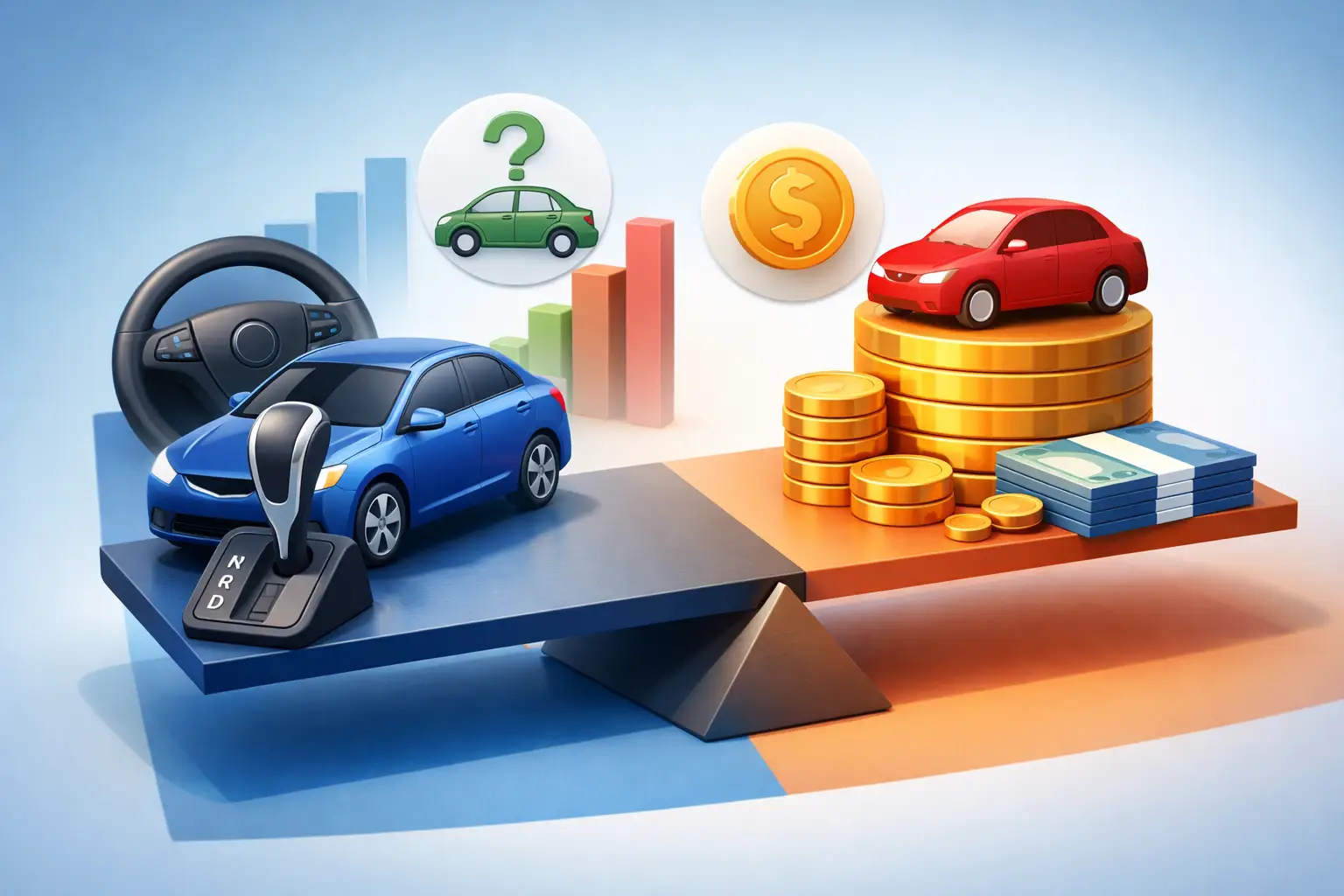
You are not just paying for an hour in the car. You are paying for how quickly you learn, how confident you feel, and how fast you get to test standard. That is why the question, are automatic driving lessons more expensive, needs a proper answer rather than a quick yes or no.
In many cases, yes, automatic lessons do cost more per hour than manual lessons. But hourly price is only one part of the picture. If automatic helps you learn faster, need fewer lessons, and pass sooner, the total cost can be closer than many learners expect.
Are automatic driving lessons more expensive per hour?
Usually, they are. In most areas, automatic driving lessons are priced slightly higher than manual lessons, and Manchester is no exception. The gap is not always huge, but it is common enough that learners notice it when comparing rates.
There are a few straightforward reasons for this. First, there are often fewer automatic instructors available than manual instructors. When supply is tighter, prices tend to rise. Second, automatic tuition has become more popular, especially with learners who want a simpler route to passing, so demand is strong. Third, automatic vehicles can carry different running and repair costs depending on the make, model, and gearbox system.
That said, higher hourly rates do not automatically mean worse value. If you are choosing lessons based only on the cheapest headline figure, you can end up spending more overall.
Why automatic lessons can cost more
The biggest factor is instructor availability. Manual cars still dominate the learner market, which means more instructors train and work in manual vehicles. Automatic instructors are in shorter supply, especially at busy times of year when students, graduates, and job seekers are all trying to get on the road quickly.
There is also the learner profile. Many people choosing automatic want speed and simplicity. They may be balancing work, uni, childcare, or a looming start date for a new job. That creates a market where convenience matters, and pricing often reflects that.
Running costs play a part too. Modern automatic cars are comfortable and easy to drive, but they can be more expensive to buy and, in some cases, more expensive to maintain. An instructor has to cover fuel, insurance, servicing, tyres, and downtime, and those business costs feed into the lesson price.
The real question: what will it cost you to pass?
This is where the conversation gets more useful. A manual lesson might be cheaper per hour, but manual driving is more complex to learn. You need to get used to clutch control, gear changes, stalling, hill starts, and coordinating more actions at once. Some learners take that in their stride. Others find it slows everything down.
With automatic, you remove several moving parts from the learning process. That means many learners can focus earlier on observation, road positioning, junctions, roundabouts, and hazard awareness. In simple terms, you may spend less time wrestling with the car and more time building test-ready driving habits.
If that reduces the number of lessons you need, the maths can shift quickly. Paying a bit more per hour can still work out well if you are test-ready sooner.
When automatic can be the better-value option
Automatic often makes financial sense for learners who need a licence fast. If your main goal is getting on the road for work, commuting, or family reasons, speed matters. Delaying your test by months because manual is taking longer can have a bigger cost than the lesson price difference.
It can also be better value if you are a nervous learner. Confidence has a direct effect on progress. If manual lessons leave you tense, overloaded, or stuck on the same problems every week, that can increase the total number of hours you need. Automatic can feel more manageable, which helps some learners improve faster and waste less time revisiting the basics.
The same applies to learners who have already tried manual and are not progressing. Switching to automatic is not taking the easy way out. It is making a practical decision based on how you learn best. Plenty of capable drivers simply do better when they are not splitting attention between the road and the gearbox.
When manual may still be the smarter choice
Manual can still win on value if you pick it up quickly and plan to drive a manual car after passing. If you are comfortable with coordination, already have some experience, or have regular access to a manual car for private practice, manual may be the more cost-effective route.
There is also the licence issue. Passing in an automatic means you can only drive automatic cars. Passing in a manual gives you the option to drive both. For some learners, that flexibility matters, especially if they may need to share a family car, rent vehicles, or keep costs down after passing.
So yes, automatic may help you pass faster, but manual can offer more long-term options. The right choice depends on what matters more to you right now – speed and simplicity, or flexibility and lower hourly rates.
Are automatic driving lessons more expensive in intensive courses?
They can be, but the same value logic applies. Intensive courses are built around speed, structure, and momentum. If you are learning over a shorter period, automatic can be a strong fit because it reduces complexity and helps many learners settle into driving more quickly.
An automatic intensive course may come with a higher price than the manual version of the same package. But if it gets you to test standard in fewer hours or with less disruption to your schedule, it can still be the more efficient choice.
This is especially relevant for learners under time pressure. If you need to pass before a job starts, before moving to university, or after a previous test fail, losing weeks to stop-start progress is frustrating and expensive in its own way. A focused automatic course can cut through that.
At Express Pass, this is exactly why some learners choose automatic over manual. They are not just comparing price tags. They are comparing how fast they can become safe, confident, and ready for test day.
What affects the price besides the gearbox?
If you are comparing quotes, do not assume the transmission type is the only reason one lesson costs more than another. Instructor experience, local demand, lesson length, car model, peak-time availability, and whether you book in blocks can all affect the final figure.
A highly rated DVSA-approved instructor with strong pass support may charge more than a budget option, but that does not mean the cheaper lesson is better value. Quality matters. So does consistency. A well-structured lesson plan, clear feedback, mock test preparation, and reliable scheduling can help you progress faster than bargain lessons that feel disorganised.
This is why the best question is not simply, how much per hour? It is, how quickly am I likely to improve with this instructor and this course format?
How to decide between automatic and manual
Start with your goal. If you need to pass quickly and want the most straightforward learning experience, automatic is often worth serious consideration. If you want maximum licence flexibility and are happy to spend longer mastering the mechanics, manual may suit you better.
Be honest about how you learn. Some people enjoy the challenge of manual and feel more in control because they understand the car more deeply. Others just want to drive safely, pass efficiently, and move on with life. Neither approach is wrong.
It also helps to think beyond pride or outside opinions. Learners sometimes feel pressure to choose manual because it is seen as the standard route. But the smarter choice is the one that gets you qualified with confidence, not the one that sounds tougher.
The bottom line on cost
So, are automatic driving lessons more expensive? Per hour, often yes. Overall, not always.
If automatic lessons help you learn faster, stay calmer, and pass with fewer hours, the extra hourly cost may be more than justified. If manual suits you well and you want broader driving options after your test, manual may offer better long-term value.
The best decision is the one that matches your timeline, your confidence level, and the kind of driving you will actually do once you pass. Price matters, but progress matters more.
Choose the route that gets you on the road with the least wasted time, the right support, and a realistic path to passing. That is usually where the best value is.