
Timeline to Passing Your UK Driving Test in 2026?
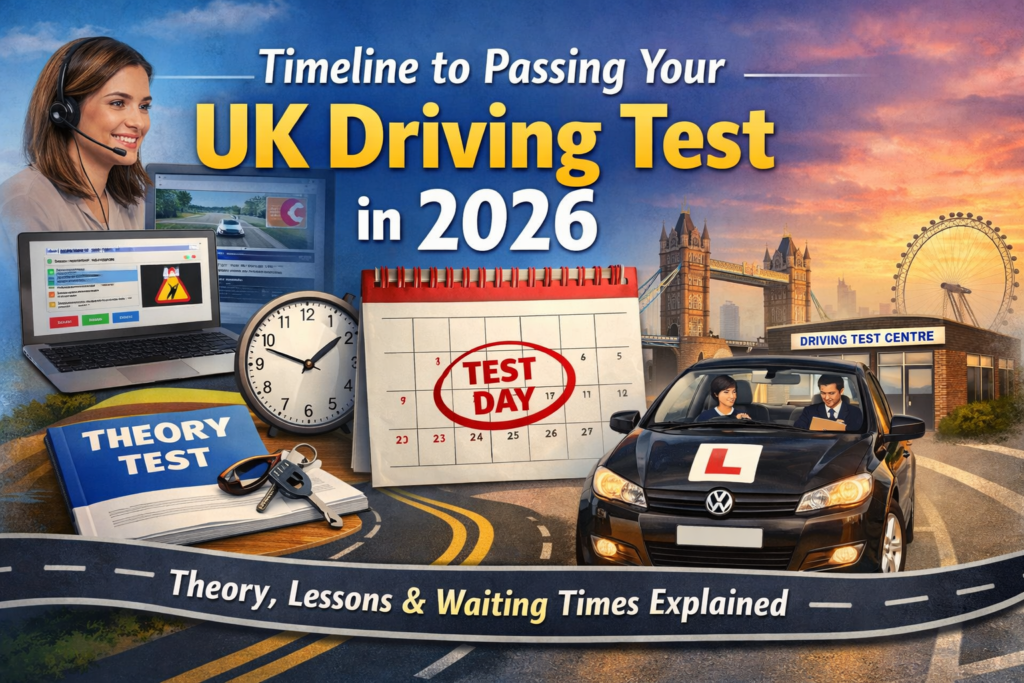
How Long Does It Take to Pass Your UK Driving Test in 2026? In the UK, learning to drive and passing your driving test is a significant milestone, but how long it actually takes to get there in 2026 depends on various factors. While the process remains largely the same, the duration for learners varies depending on their experience, confidence, and how much driving practice they get. Let’s dive into what you can expect in terms of timelines, process, and factors that influence how long it will take for you to pass your driving test in 2026. 1. The Process of Learning to Drive Before you can take your practical driving test in the UK, you must first pass the theory test. This two-part test consists of a multiple-choice section and a hazard perception test, designed to assess your knowledge of road signs, rules, and how to handle different driving situations. Once you pass the theory test, you can begin taking driving lessons. Here’s a typical outline of the process: The Theory Test: The theory test typically takes around 1 to 2 months of preparation for most people. You can start studying for it while still taking driving lessons, as many driving schools offer combined theory and practical training. Learning to Drive: The time it takes to learn to drive can vary significantly. On average, learners in the UK take 45-50 hours of professional driving lessons. However, this is only an estimate, and some people may take more or less time depending on their ability, the frequency of lessons, and their confidence behind the wheel. Additional Practice: Many learners also choose to practice with family or friends outside of their lessons, which can help to reduce the number of lessons needed. Some learners may only need 20-30 hours of lessons, while others may require more extensive training. 2. Booking Your Driving Test After completing your lessons and feeling confident in your ability, you can then book your driving test. As of 2026, booking a practical driving test can often be a lengthy process. Test availability varies by location and can be affected by demand. Due to the increasing number of learners and limited testing slots, some areas experience longer waiting times. It’s important to note that waiting times for driving tests have increased in many areas of the UK, with some learners having to wait several weeks or even months to secure a test date. The average waiting time in 2026 is around 8-12 weeks, but this can fluctuate based on where you live. For example, in busy urban areas, the wait may be longer. 3. Factors Influencing How Long It Takes Several factors influence how long it will take to pass your UK driving test in 2026: Availability of Test Dates: As mentioned, test availability can vary. Popular areas often have longer wait times, which can extend your overall learning process. Personal Ability: Every learner is different. Some learners pick up driving skills quickly and pass the test in a matter of months, while others may need more time to build confidence and skills. Frequency of Lessons: The more frequently you take lessons, the quicker you’ll progress. Consistency is key when learning to drive, so those who take lessons weekly or bi-weekly typically progress faster than those who take them sporadically. Test Failures: Unfortunately, not everyone passes their driving test on the first attempt. If you do fail, you’ll need to book another test and continue practicing, which will delay your goal of passing. 4. What If You Fail Your Test? Failure rates can vary, but around one in three drivers fail their first practical driving test in the UK. If you don’t pass, don’t worry. It’s a normal part of the process for many people. After failing, you’ll need to: Wait for a New Test: You’ll need to book another driving test. However, there may be another waiting period, which can extend the time it takes to pass. Additional Lessons: Many people who fail their first test take additional lessons to address specific areas where they struggled. These can help improve driving skills and boost confidence for the next attempt. 5. The Impact of COVID-19 The COVID-19 pandemic significantly impacted driving tests in the UK, leading to test backlogs and delays in 2020 and 2021. Although the situation has improved in 2026, some areas are still catching up, and you may still face longer waiting times for your driving test. 6. The Future of UK Driving Tests in 2026 In 2026, the UK government is expected to continue improving driving test infrastructure. This might include expanding test centers, offering more flexible test dates, and even embracing technology such as virtual driving tests (although these are not yet widespread). However, it’s likely that waiting times and the overall process will continue to be impacted by demand, making it important to plan ahead and book your test as early as possible. Conclusion: How Long Does It Take to Pass Your UK Driving Test in 2026? In summary, while the duration to pass your UK driving test in 2026 depends on many factors, most learners can expect the following rough timeline: Theory Test: 1-2 months Driving Lessons: 6-12 months (average of 45-50 hours) Test Waiting Time: 8-12 weeks, depending on location If you pass on the first attempt, it can take approximately 6 to 12 months from starting your lessons to obtaining your driving license. However, this can be influenced by factors such as the availability of test dates, how quickly you learn, and the number of test attempts.
Get Behind the Wheel Sooner: How to Fast-Track Your Driving Test in 2025

Get Behind the Wheel Sooner: How to Fast-Track Your Driving Test in 2025 Waiting to take your practical driving test in the UK can feel like an eternity, with some DVSA test centres in 2025 quoting wait times of up to five months. If you’re itching to hit the road and claim your driving freedom, these delays can be a real buzzkill. But don’t worry—there are smart, practical ways to skip the long queue and snag an earlier test slot. Here’s how to make it happen. Why Are Driving Test Waits So Long? The struggle is real, and here’s why: – Everyone wants to drive. The demand for tests is sky-high as more people than ever are eager to get licensed. – Not enough examiners. Some test centres are still short-staffed, making it harder to clear the backlog. – Slots vanish fast. New test appointments are often snapped up in minutes, leaving latecomers stuck. Knowing what’s causing the delays can help you plan smarter and beat the system. Top Tips to Fast-Track Your Driving Test 1. Book Early, Stress Less Don’t wait until you’re a pro behind the wheel to book your test. As soon as you pass your theory exam, grab a slot. You can always push it back later if you need more practice, but booking early gets you in the game. 2. Team Up with a Driving School Some driving schools, like ExpressPass Driving School, have clever systems to track cancellations and book earlier slots for their students. It’s like having a secret weapon to jump the queue. 3. Hunt for Cancellations DVSA releases new test slots throughout the day. Check their website early in the morning, during lunch breaks, or in the evening to catch freshly dropped appointments. Persistence pays off! 4. Be Open to Nearby Test Centres Don’t limit yourself to your local centre. Casting a wider net—say, 10–15 miles away—can uncover hidden slots with shorter waits. A quick trip could mean driving home with your licence sooner. 5. Try an Intensive Driving Course Want to speed things up? Intensive courses cram lessons and test prep into just 1–2 weeks, getting you test-ready fast. Plus, many schools bundle fast-track test bookings with the package, so you’re sorted from start to finish. 6. Watch Out for Scams Yes, fast-track tests are legit—they’re just earlier slots booked through the official DVSA system. But steer clear of shady third-party services charging crazy fees for “guaranteed” dates. Stick to DVSA-approved channels or trusted driving schools to keep things safe and straightforward. Get on the Road Sooner Long wait times don’t have to derail your driving dreams. By booking early, staying flexible, and teaming up with a driving school that offers fast-track options, you’ll be cruising with your licence in no time. Ready to Hit the Gas? At ExpressPass Driving School, we’re all about getting you on the road fast with our fast-track test bookings and intensive courses across Manchester. Our expert instructors and booking team are here to make it happen—sometimes in just weeks! 📞 Give us a call today to kickstart your driving journey!
What To Do If You Get Into A Minor Car Accident?
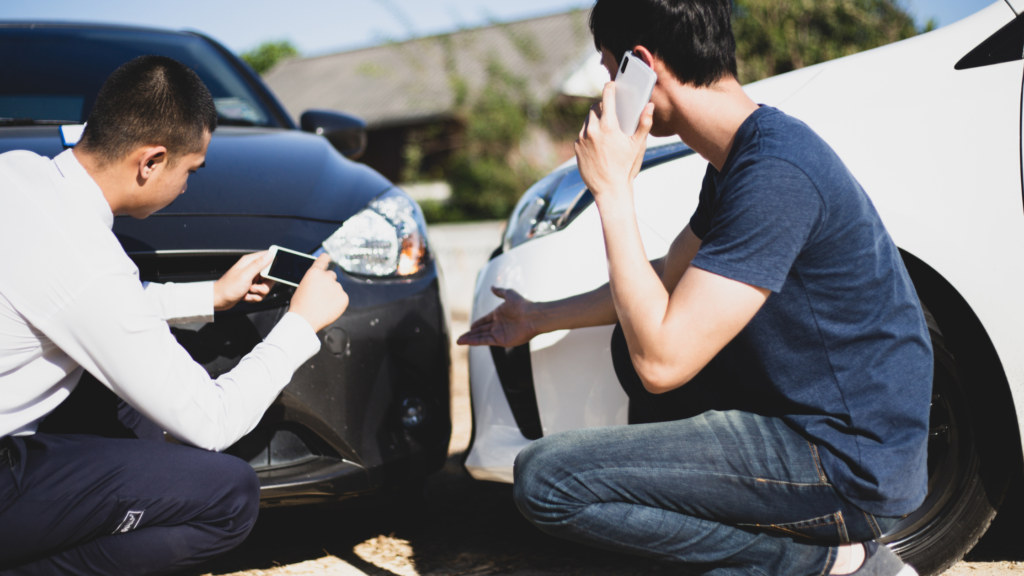
A minor car accident can be stressful, even if there are no major injuries or damages. Whether it’s a small bump in traffic or a parking lot scrape, knowing what to do next can help you stay safe and handle the situation efficiently. Here’s a step-by-step guide on what to do if you get into a minor car accident. 1. Stay Calm and Check for Injuries Take a deep breath and remain as calm as possible. Check yourself and any passengers for injuries. If anyone is hurt, even slightly, call emergency services immediately. 2. Move to a Safe Location If the accident is minor and your vehicle is drivable, move it to a safe spot, such as the side of the road, to avoid blocking traffic. Turn on your hazard lights to alert other drivers. 3. Check for Vehicle Damage Once you are safely parked, inspect your car and the other vehicle involved. Look for visible damages and take note of any scratches, dents, or broken parts. 4. Exchange Information Even for a minor accident, you need to exchange details with the other driver. Collect the following information: Name and contact details Driver’s license number Vehicle registration number Insurance information Make, model, and color of the vehicles involved If there are any witnesses, try to get their contact details as well. 5. Take Photos and Notes Document the scene by taking clear photos of the vehicles, any visible damage, the surrounding area, and any relevant road signs or signals. This can help with insurance claims and provide evidence if needed. 6. Avoid Admitting Fault Even if you feel responsible for the accident, avoid admitting fault at the scene. The insurance companies will determine liability based on the evidence and reports. 7. Contact the Authorities (If Necessary) For minor accidents, it may not be required to call the police, but it’s always good to check local laws. If the damage is significant or if there is a dispute, calling the police can help get an official accident report. 8. Notify Your Insurance Company Report the accident to your insurance provider as soon as possible. Provide them with the necessary details, including photos and witness information, to help with the claims process. 9. Get a Vehicle Inspection Even if your car seems fine, it’s a good idea to have it checked by a mechanic. Some damages may not be visible immediately but could cause problems later. 10. Learn from the Experience Reflect on what happened and see if there are ways to prevent similar accidents in the future. Whether it’s being more cautious in traffic or understanding blind spots better, learning from the incident can make you a safer driver. Final Thoughts Minor car accidents can be frustrating, but handling them correctly can save you time, stress, and money. Stay calm, follow these steps, and always prioritize safety. If you’re learning to drive, practicing defensive driving techniques can help reduce the risk of accidents. For professional driving lessons that help you build confidence on the road, contact Express Pass Driving School today!
What To Expect During Your First Driving Lesson
Taking your first driving lesson is an exciting milestone, but it’s natural to feel a little nervous. At Express Pass Driving School, we ensure that every learner feels comfortable and confident from the very first session. If you’re wondering what to expect, here’s a step-by-step guide to help you prepare. 1. Meeting Your Instructor Your driving lesson will begin with your instructor picking you up from your agreed location. They will introduce themselves, check your provisional driving license, and explain what you’ll be covering in the session. 👉 Tip: If you wear glasses or contact lenses, make sure to bring them, as you’ll need to read a number plate from 20 meters away for the eyesight test. 2. Getting to Know the Car Before hitting the road, your instructor will introduce you to the car’s controls. You’ll learn about: ✅ The accelerator, brake, and clutch (for manual cars)✅ How to adjust your seat, mirrors, and steering wheel✅ The handbrake and gears✅ Indicators and dashboard controls This is your chance to ask questions and get comfortable with the vehicle. 3. Learning Basic Driving Skills Once you’re ready, your instructor will guide you to a quiet area, like a residential street or an empty car park, to start practicing the basics. This may include: 🚗 How to start the engine and move off smoothly🚦 How to stop the car safely🔄 Steering control and positioning🔁 Simple turns and checking mirrors Your instructor will give clear, step-by-step instructions to build your confidence at a comfortable pace. 4. Practicing Essential Road Skills Depending on your progress, you may also learn: ✔️ How to use clutch control (for manual cars)✔️ Changing gears smoothly✔️ Approaching junctions and roundabouts✔️ Understanding road signs and markings Remember, the first lesson is all about getting comfortable behind the wheel—you won’t be expected to master everything straight away! 5. Ending Your Lesson & Feedback At the end of your lesson, your instructor will provide feedback on your strengths and areas to improve. They’ll also discuss what you’ll cover in your next session. 👉 Tip: Take a few notes after your lesson to remember key points and what to practice next. Final Thoughts: Stay Calm & Enjoy the Process! Your first driving lesson is a learning experience, not a test. The more relaxed and focused you are, the quicker you’ll gain confidence on the road. At Express Pass Driving School, our experienced instructors are here to guide you every step of the way. If you’re ready to start your driving journey, book your first lesson today! 🚗💨
Top 5 Tips for Passing Your Driving Test on the First Try
Passing your driving test on the first attempt is an exciting milestone, and with the right preparation, you can make it happen! At Express Pass Driving School, we specialize in helping learners gain confidence and skills to succeed. Here are our top five expert tips to help you pass your test the first time. 1. Take Professional Driving Lessons Investing in lessons with a qualified driving instructor is key. They’ll teach you proper driving techniques, test routes, and what examiners look for. Our instructors at Express Pass Driving School provide structured lessons tailored to your skill level, ensuring you’re fully prepared. Pro Tip: Book a mock driving test with your instructor to simulate real test conditions. 2. Know the ‘Show Me, Tell Me’ Questions During your test, the examiner will ask you one “Tell Me” question (before driving) and one “Show Me” question (while driving). These cover basic car safety and maintenance, like checking oil levels or turning on headlights. Pro Tip: Practice these questions with your instructor so you answer confidently on test day! 3. Master Manoeuvres and Observations Manoeuvres like parallel parking, bay parking, and pulling up on the right are commonly tested. However, many learners lose marks for poor observation rather than the manoeuvre itself. Pro Tip: Always check your mirrors, signal appropriately, and look over your shoulder when necessary to show the examiner you are fully aware of your surroundings. 4. Stay Calm and Manage Test Day Nerves It’s natural to feel nervous, but staying calm is essential for driving safely. Get plenty of rest before your test, arrive early at the test center, and take deep breaths if you feel anxious. Pro Tip: If you make a mistake, don’t panic! Keep driving safely—small errors won’t necessarily result in a fail. 5. Know Your Test Routes While the test route isn’t fixed, examiners often use similar roads and junctions. Practicing in these areas gives you an advantage. Pro Tip: Ask your instructor to take you on common test routes to familiarize yourself with the roads and tricky junctions near your test center. Final Thoughts Passing your driving test the first time is achievable with the right preparation, mindset, and instructor support. At Express Pass Driving School, we specialize in helping learners pass with confidence. 🚗 Ready to book your driving lessons? Contact us today and get on the road to success!